
Boxing
What are the weight classes in boxing?
Boxing has many different weight classes, but what are they?
published: 2024-10-02
Last updated: 2024-10-24

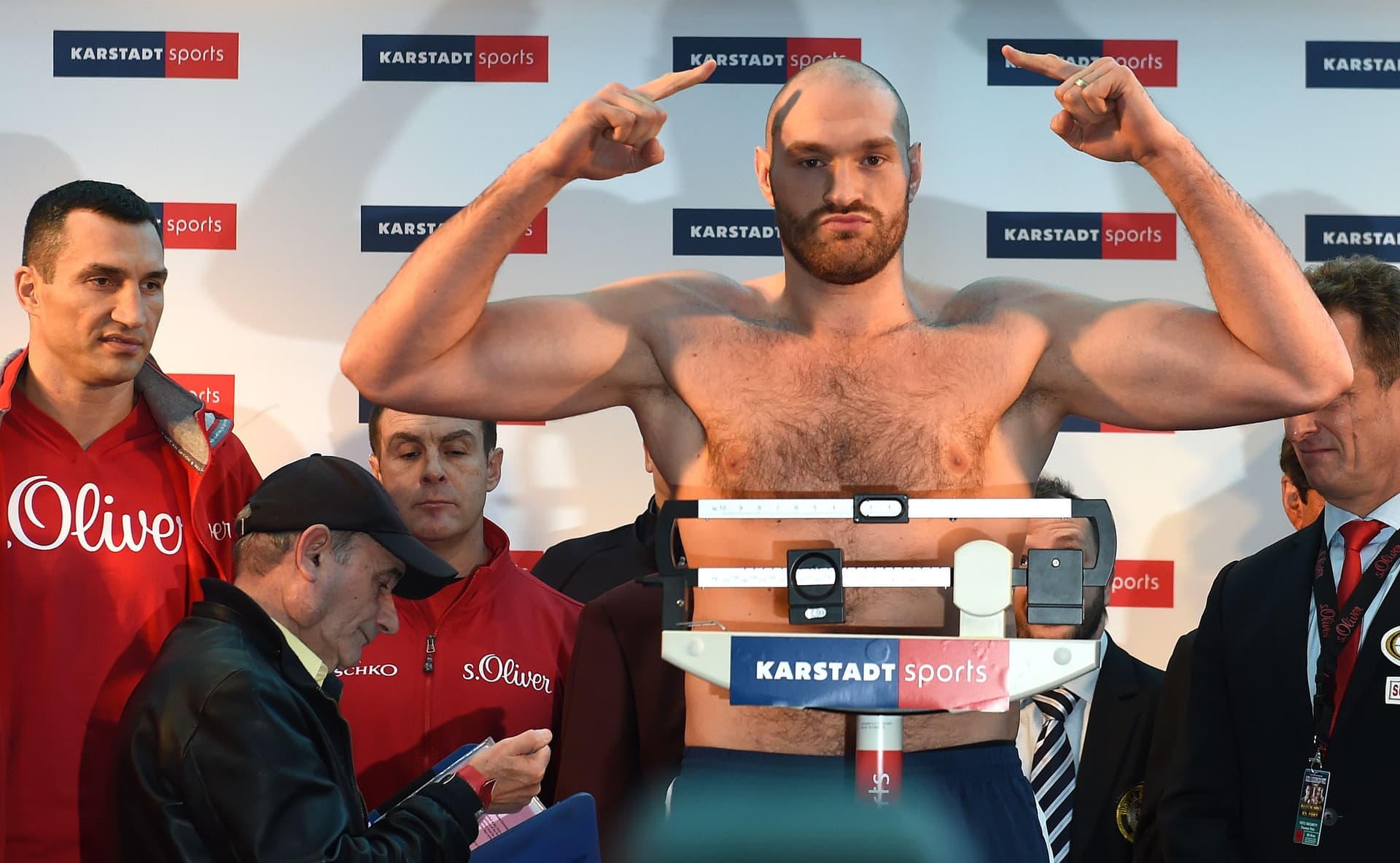
Ukrainian Heavyweight World Champion Wladimir Klitschko//Getty Images
There are far more weight classes in boxing than you might expect
In professional boxing there are at least 17 different weight classes, which is over double than when boxing first became legalised.
At first, there were only eight divisions established in modern boxing – Heavy, Light-heavy, Middle, Welter, Light, Feather, Bantam and Flyweight. These are often referred to as ‘The original eight’.
The reason the weight classes have expanded so much over the years is not due to money or politics, but simply down to safety.
Whenever it became apparent that the weight limits were too expansive, then a new division would be created to avoid any boxer holding an advantage over another. The difference in size and weight was often too apparent and unsafe, so the introduction of extra classes would create a safer, more even playing field.
It took hundreds of years to form the 17 weight categories that are universally adhered to today. Here is a brief history of the evolution of boxing weight divisions.
The Earliest Weight Classes
Over 300 years ago, a bare-knuckle boxer from England, James Figg, declared himself the champion of England in 1719.
It unofficially made him the first world heavyweight champion when there no weight divisions, just simply because, at six-feet-tall and weighing 84kg, he was considered big.
Some years later, in 1746, a lightweight division was introduced for the men that were not known for being so big. Historical reports suggest that boxers under 70kg or 76kg were considered lightweights.
Other reports from history say that it was Jack Broughton in 1738 who introduced this weight for any boxers weighing less than 160lbs, which is todays middleweight limit. According to ‘Broughton’s Rules’ anyone over 160lbs was considered a heavyweight.
There were also mentions of a third category for medium-sized men, called middleweight.
In 1792, some fighters began to call themselves welterweights, which came from a horseracing term. This category was registered at 63.5kg.
It wasn’t until a century later when the Queensberry Rules transformed the sport of boxing that weights started to become standardised – Featherweight (52.1-54.5kg / 115-120lbs) / Lightweight (60-62.6kg / 133-135lbs) / Welterweight (64.5kg / 142lbs) / Middleweight (70-71.8kg / 154-158lbs) / Heavyweight (no limit).
In 1903, the light-heavyweight division was introduced to bridge the expansive gap between middle and heavyweight. It was set at 175lbs, which it remained at ever since. However, according to ‘Walker’s Law’, this weight was officially established 1909 by the NSC (National Sporting Club).
All these weights fluctuated over the years until they eventually became official and universally accepted.
The junior weight divisions struggled to find acceptance for many years, but the early weights were set at – Junior-lightweight (59ks / 130lbs) / Junior-welterweight (63.5kg / 140lbs).
In 1962, a light-middleweight division was created by the WBA, also known as super-welterweight. In the U.S. this was established at 154lbs, which it stayed at thereafter. The UK didn’t introduce this class until 11 years later in 1972.
When the WBA and the WBC split to form two world governing bodies in boxing, it heralded a new era for the lighter weights with the introduction of mini-flyweight, light-flyweight, super-flyweight, super-bantamweight, as well as super-middleweight and junior-heavyweight.
This increased the amount of weight classes to 17 that we know now today. Although that number is not wholly accurate when considering the ‘Bridgerweight’ and ‘Atomweight’ divisions, which are not yet universally accepted.
Timeline of Weight Classes
- 1719: Heavyweight
- 1738-1746: Lightweight / Middleweight
- 1792: Welterweight
- 1867: Featherweight
- 1894: Bantamweight
- 1903: Light-heavyweight
- 1911: Flyweight
- 1959: Super-lightweight / Super-featherweight
- 1962: Super-welterweight
- 1975: Light-flyweight
- 1976: Super-bantamweight
- 1980: Cruiserweight / Super-flyweight
- 1984: Super-middleweight
- 1987: Minimumweight
- 2007: Atomweight
- 2020: Bridgerweight
Amateur Boxing
When the Amateur Boxing Association was formed in Britain in 1880, there were just four weight classes – Featherweight (126lbs) / Lightweight (140lbs) / Middleweight (158lbs) / Heavyweight (no limit).
When it became the AIBA (Amateur International Boxing Association) in 1946, it changed to metric and expanded to 11 weight categories – Light-flyweight (46-49kg) / Flyweight (49-52kg) / Bantamweight (52-56kg) / Featherweight (54-57kg) / Lightweight (57-60kg) / Light-welterweight (60-64kg) / Welterweight (64-69kg) / Middleweight (69-75kg) / Light-heavyweight (75-81kg) / Heavyweight (81-91kg) / Super-heavyweight (+91kg).
Bridgerweight
Only in 2020, a brand-new weight category was created by the WBC (World Boxing Council).
It was formed following the need to bridge the gap between 200lbs cruiserweights and the bigger heavyweights that weigh north of 224lbs.
The new division was named after Bridger Walker, a six-year-old boy who received terrible injuries and facial scars after saving his younger sister from a dog attack in 2020.
There have been three WBC bridgerweight champions so far in the new weight’s history – Oscar Rivas, Lukasz Rozanski and Larence Okolie.
The WBA followed suit in 2023 and their one and only champion is Russian Muslim Gadzhimgomedov.
Atomweight
In female boxing there is weight category known as ‘Atomweight’, which isn’t featured in man’s boxing.
Atomweight is set at a limit of 102lbs.
Tina Rupprecht is the current WBC atomweight champion, and Yokasta Valle is the unified IBF and WBO atomweight champion.
The WBA call the division light-minimumweight and their champion is Eri Maatsuda.
The Weights That Never Made It
- Paperweight (95-105lbs)
- Heavy-featherweight (122lbs)
- Woodweight (128lbs)
- Ironweight (150lbs)
- Super-cruiserweight (210lbs)
- Dreadnought (+200lbs)
The 17 Weight Classes
| Rank | Weight Class | Limit | Notable Boxers | |
| 1 | Heavyweight | +200lbs | Muhammad Ali, Lennox Lewis, Tyson Fury, Joe Louis, Rocky Marciano, Joe Frazier | |
| 2 | Bridgerweight | 224lbs | Lawrence Okolie, Alen Babic, Ryad Merhy, Lukasz Rozanski, Andrew Tabiti | |
| 3 | Cruiserweight | 200lbs | David Haye, Evander Holyfield, Oleksandr Usyk, James Toney, Johnny Nelson, David Haye | |
| 4 | Light-Heavyweight | 175lbs | Artur Beterbiev, Dmitry Bivol, Archie Moore, John Conteh, Joshua Buatsi, Sergey Kovalev | |
| 5 | Super-Middleweight | 168lbs | Saul Canelo Alvarez, Joe Calzaghe, Andre Ward, Roy Jones Jr, James Toney, Nigel Benn | |
| 6 | Middleweight | 160lbs | Sugar Ray Robinson, Marvin Hagler, Carlos Monzon, Gennady Golovkin, Bob Fitzsimmons | |
| 7 | Super-Welterweight | 154lbs | Miguel Cotto, Oscar De La Hoya, Harry Greb, Tony Zale, Bernard Hopkins, | |
| 8 | Welterweight | 147lbs | Jose Napoles, Emile Griffith, Sugar Ray Leonard, Mickey Walker, Sugar Ray Robinson | |
| 9 | Super-Lightweight | 140lbs | Benny Leonard, Joe Gans, Henry Armstrong, Pernell Whitaker, Aaron Pryor | |
| 10 | Lightweight | 135lbs | Roberto Duran, Benny Leonard, Alexis Arguello, Tony Canzoneri, Ike Williams, Freddie Welsh | |
| 11 | Super-Featherweight | 130lbs | Kid Chocolate, Floyd Mayweather, Azumah Nelson, Julio Cesar Chavez | |
| 12 | Featherweight | 126lbs | Sandy Saddler, Freddie Miller, Willie Pep, Erik Morales, Johnny Dundee, Kid Chocolate | |
| 13 | Super-Bantamweight | 122lbs | Naoya Inoue, Eder Jofre, Marco Antonio Barrera, Jeff Fenech, Nonito Donaire, Matt Marsh | |
| 14 | Bantamweight | 118lbs | Junto Nakatani, Carlos Zarate, Panama Al Brown, Fighting Harada, George Dixon, Naoya Inoue | |
| 15 | Super-Flyweight | 115lbs | Jesse Rodriguez, Kazuto Ioka, Johnny Tapia, Omar Andres Narvaez, Fernando Montiel | |
| 16 | Flyweight | 112lbs | Sunny Edwards, Roman Gonzalez, Sot Chitalada, Pongsaklek Wonjngkam, Miguel Canto | |
| 17 | Light-Flyweight | 108lbs | Sivenathi Nontshinga, Kenshiro Teraji, Jorge Arce, Humberto Gonzalez, Jung Koo Chang | |
| 18 | Strawweight | 105lbs | Thammanoon Niyomtrong, Alex Winwood, Panya Pradabsri, Hiroki Ioka, Ricardo Lopez | |
| 19 | Atomweight | 102lbs | Momo Koseki, Fabiana Bytyqi, Yokasta Valle, Katia Gutierrez, Seniesa Estrada, Etsuko Tada | |


Tim has over 27 years experience within the sports industry, working for football clubs Arsenal FC and Millwall FC, and boxing news websites British Boxing News, Boxing Social and Global Boxing News. His boxing articles have been published in Boxing News Magazine, national newspapers, plus many other major news outlets.