
Tennis
How Does a Tie Break Work in Tennis? Quick Guide!
A tennis game that’s deadlocked is brought to conclusion by utilising a tie breaker. This special game is a very exciting and thrilling dynamic in the overall tennis match.
published: 2024-10-31
Last updated: 2024-10-31

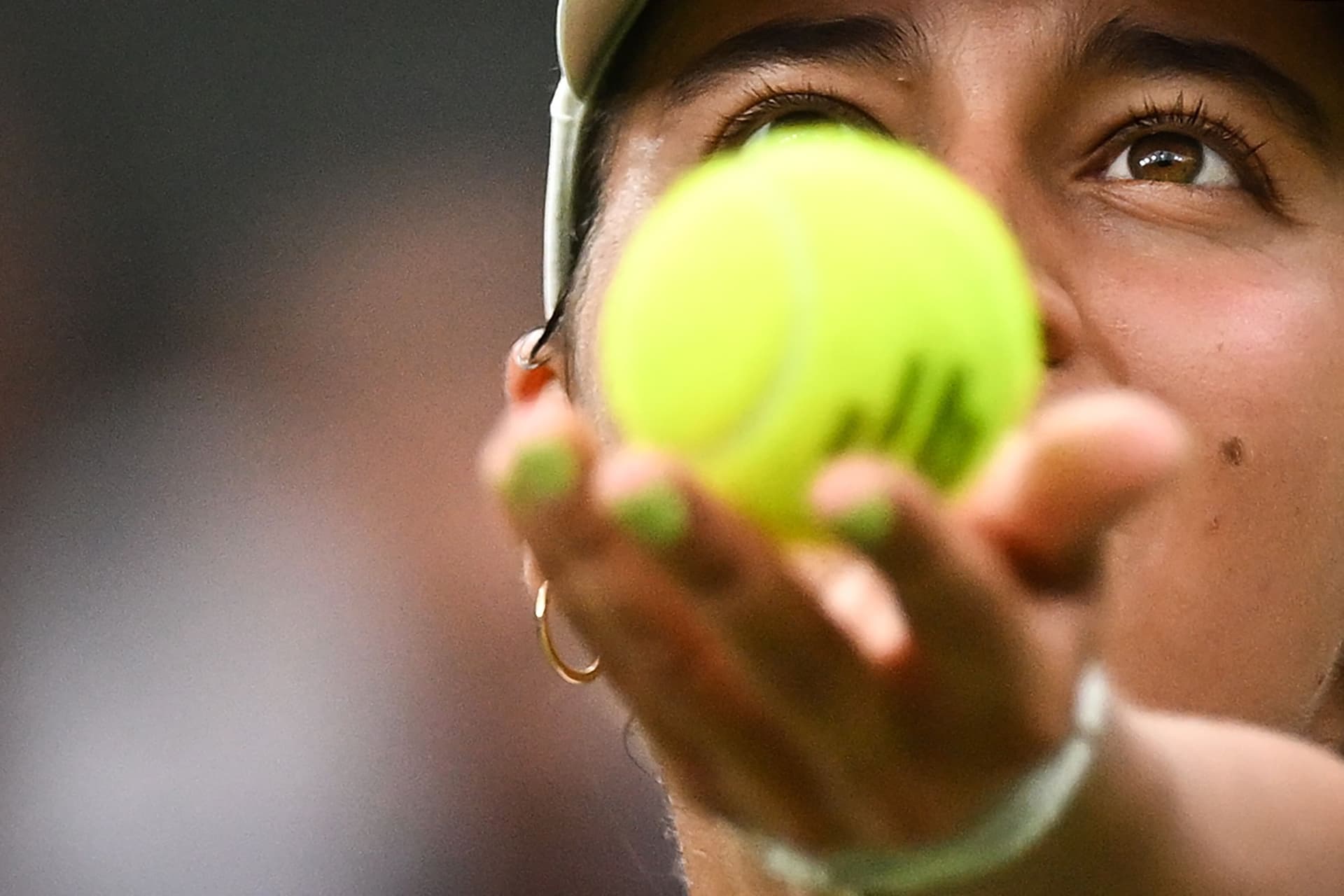
Jessica Bouzas Maneiro//Getty Images
Tie breaks are a crucial part of the game of tennis. A tie break helps determine the outcome and brings sets that would continue indefinitely to a timely conclusion.
When scores in a tennis set are tied at 6-6 and neither player can secure a two-game lead, tie breaks are triggered to break the deadlock and determine the set winner.
We delve into tie breaks in this quick guide to help you understand their rules and how they sway the overall outcome of a tennis match.
How Do Tennis Matches Work? Let’s Refresh Your Memory
Context does really matter, so allow us to refresh your memory quickly before we get into the nitty-gritty of tie breakers to give you a clearer picture.
Game, Set, Match
Rhymes well and would probably pass off greatly in a rap verse, but that’s not the case here unfortunately, or otherwise. A traditional game of tennis is played in sets, games, and the overall result being the match.
The number of sets may vary in a tennis match, from the best out of three or five sets, which require a player to win a minimum of six games by a margin of two to win the set.
That would be 6-4 for instance. Set won, and on to the next.
The overall match winner is determined by the number of sets won. Hence, ‘match’, in ‘game, set, match’. There you go, you have your winner. Simple enough? Let’s have a look at the following table for more clarity.
| Set 1 | Set 2 | Set 3 | Set 4 | Set 5 | |
| Player A | 6 | 5 | 6 | 4 | 7 |
| Player B | 1 | 7 | 2 | 6 | 5 |
In the five-set match, we used as an example, Player A won three sets as compared to Player B’s two, therefore, winning the overall match.
The juice, however, for our quick guide on the tie break lies in the scores in each respective set. As we can see in the table, there was no point at which the scores were tied at 6-6, therefore, a tie break game was not necessary.
What Necessitates a Tie Break and How it Works?
Scores in a set tied at 6-6 with neither player able to lead the game by two points trigger a tie break to break the deadlock by employing a special game or mini game to determine the set’s winner.
In this scenario, players will be required to compete in the tie break game with the aim of reaching seven points first, leading by two points. For instance, 7-5.
If this is not the case and players are tied at 6-6, they will continue playing until one player attains a two-point lead to win the tie break game.
Scores can go as high as 10-18 or 15-17 because there is not limit, and this is probably what makes tie breaks so exciting and alluring.
This goes for both singles and doubles with the only difference between the two being the serve.
Once the tie break game is over, the set score is recorded as 7-6. The tie break score is immaterial in that regard.
Let’s switch up our table above with one or two sets needing a tie break to illustrate further.
John Isner has played in the most tie breakers in men’s tennis, as well as won the most.
| Set 1 | Set 2 | Set 3 | Set 4 | Set 5 | |
| Player A | 6 | 5 | 6 | 7 | 7 |
| Player B | 7 | 7 | 2 | 6 | 5 |
Here Player B won the overall game by three sets, however, needed a tie break to win the first set. The fourth set also needed a tie break, and it would have been exciting were it a real game of tennis. We will show you why.
Player A would have won the best of five match had he won the fourth set at 2-1, just needing one more set, but couldn’t because Player B probably dug deep.
This forced the game into a tie break at 6-6, which he eventually won to give him set four and tie the match at 2-2.
Just play it out in your head, its thrilling! Blockbuster stuff if we may say.
Types of Tie Breakers
There are two different ways a tie break can be played. The principles are still the same to what we’ve already alluded to, but owing to tennis being a sophisticated sport, we will break it down briefly for you.
12-Point Tie Breaker
This tie breaker is basically what we’ve described a tie breaker to be. A first to seven but is referred to as a 12-point tie breaker because it’s a best of 12 points won by two, 7-5. See the mathematical logic there?
10-Point Tie Breaker
A first to ten points tie breaker, with a win by two points as well. The 10-point tie breaker is often referred to as super tie breaker.
Serving and Switching Sides in a Tie Breaker
In a tie breaker, serving alternates at certain intervals, as well as switching sides. This is to avoid giving unfair advantage to one player due to various factors such as crowd support or the elements of weather.
Serving
The player who received to tie the game at 6-6 in the tied set, will begin serving on the deuce side. In simpler terms, the right side of the court. After this, the receiver will serve twice from the advantage court, which is the left side of the court. The pattern, alternating two serves each, continues throughout the tie break.
Switching Sides
Switching sides is another interesting dynamic of a tie breaker. Players switch after the first point and at multiples of six afterwards until a winner is determined. That is after every six points in the game. That would be at 7, 13, 19 and so on.
The rules for serving and switching sides in doubles are slightly different, but the characteristics are similar, nonetheless.
Who Has the Highest Winning Percentage in Tie Breakers?
Novak Djokovic sits at the summit with 66.3%. He has won 334 of the 504 tie breakers he’s competed in.
What We Learned From this Quick Guide
Let’s jog your memory quickly as we come to the end of this quick but comprehensive guide.
| 1. | A tie breaker helps bring to conclusion a deadlocked set in a tennis match |
| 2. | It takes place at a tied 6-6 score in a set |
| 3. | The aim is to reach seven points first |
| 4. | The set’s score is recorded at 7-6 after the tie break |
| 5. | Alternating the serve and switching sides happens at different intervals |
| 6. | There are different types of tie breakers |
| 7. | We hope we didn’t miss anything, but lastly, tie breakers are thrilling and alluring |


Based in Johannesburg, South Africa, Jimmy holds a Diploma in Journalism and Media Studies. He’s a passionate sports enthusiast with broad knowledge across various disciplines.