
Cricket
How to Calculate the Follow-on in Test Cricket
In a Test match, the follow-on can be enforced if the team batting first leads by 200 or more runs in their first innings. For example, if Team A scores 469, Team B needs 270 to avoid the follow-on.

SportsBoom offers honest and impartial bookmaker reviews to help you make informed choices. While we may earn commissions through affiliate links, our content remains independent and free from promotional influence. For more information, see our Content Transparency and How We Review pages.

Ollie Robinson of England celebrating//Getty Images
Test cricket is the oldest and most traditional format of the game. It's known for its endurance, strategy, and mental toughness.
The first-ever Test match took place between England and Australia in 1877 at the Melbourne Cricket Ground. It marked the beginning of a tradition that has endured for over a century. Australia won by 45 runs, setting the stage for a legendary sporting rivalry.
One significant aspect of Test cricket is the follow-on rule, which can heavily influence the outcome of a match. This rule adds another layer of strategy, as teams must carefully consider their approach to avoid being forced to bat again.
What is follow-on in Test cricket?
In Test cricket, the follow-on is a strategic rule that can be enforced by the team batting first if they have a significant lead over the opposing team after both innings. If the team batting first scores substantially more runs than the team batting second, usually 200 runs or more, the captain can choose to enforce the follow-on. This decision compels the opposing team to bat again immediately after their first innings, without the usual break. The follow-on rule aims to speed up the match's progression and increase the chances of achieving a result within the allotted five days. For instance, if Team A scores 450 runs in their first innings, and Team B scores only 200 runs in reply, Team A can enforce the follow-on, requiring Team B to bat again.
The team's captain that batted first holds the authority to decide on enforcing the follow-on. As mentioned above, the decision arises when the team holds a commanding position and aims to expedite the match's outcome by dismissing the opposition twice within their first innings total. Teams opt for the follow-on to eliminate the possibility of a drawn match.
In long-format cricket, such as Tests and domestic First Class matches, the follow-on rule comes into play. Typically, teams in these formats are expected to bat twice, and a match cannot be won until at least three innings are completed.
Follow-on rules
According to Law 14 of the Laws of Cricket, the lead necessary for enforcing the follow-on varies based on the match's duration. In Tests spanning five days, teams must secure a lead of 200 runs or more be able to enforce the follow-on. However, in domestic First Class competitions like the Ranji Trophy, which is played across four days, a lead of 150 runs is sufficient. As the duration of the match shortens, so does the required lead: in two-day cricket, teams need a lead of 100 runs, while in matches lasting just a day, a lead of 75 runs is enough to enforce the follow-on.
Law 14.1.3 additionally states that the required lead will be adjusted if the first day of a multi-day match is affected by rain and play is washed out.
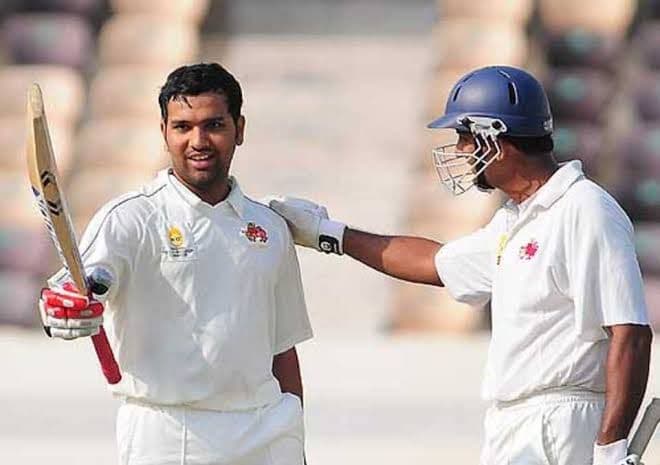
Image Credit: @Luckyytweets (X Account)
When teams lost after enforcing a follow-on
As per cricket rules, the batting side must surpass the opponent's total in the fourth innings without losing all 10 wickets to secure a victory. On the other hand, if the bowling team dismisses all 10 batsmen in the fourth innings before the batting side reaches the required target, the bowling side claims victory. However, if the batting side falls short of the target and still has wickets remaining as time expires, the match concludes in a draw.
In four Test matches, teams have experienced defeat despite enforcing the follow-on. In one instance, Australia, with a first-innings lead of 261 runs, succumbed to England's resilient performance, losing by 10 runs at the Sydney Cricket Ground in 1894. Similarly, Australia, holding a commanding lead of 227 runs in the first innings, suffered an 18-run loss to England at Headingley in 1981.
Another notable example is Australia's loss to India at Eden Gardens in 2001, despite a substantial first-innings lead of 274 runs. More recently, England faced defeat against New Zealand at Basin Reserve in 2023, despite a first-innings lead of 226 runs.
Trail meaning in Test cricket
In Test cricket, the term "trail" refers to the deficit a team faces in runs compared to their opponent's total score in the first innings. For example, if Team A scores 300 runs in their first innings and Team B scores 250 runs, Team B is said to be trailing by 50 runs.
FAQs
What is follow-on score for 578?
In Test cricket, the follow-on score is typically 200 runs less than the opponent's first innings total. Therefore, if a team scores 578 runs in their first innings, the follow-on score for their opponent would be 378 runs (578 - 200 = 378).
How many runs required to avoid follow on 210?
In Test cricket, to avoid the follow-on, a team needs to ensure their first innings total is at least 200 runs less than the opponent's first innings total. Therefore, if the follow-on score is 210, the team would need to score at least 410 runs in their first innings to avoid being asked to bat again by the opponent.
How many runs need to avoid follow on 480?
If the follow-on score is 480, the team would need to score at least 280 runs in their first innings to avoid being asked to bat again by the opponent.
How to avoid follow-on 110?
If the follow-on score is 110, the team would need to score at least 310 runs in their first innings to avoid being asked to bat again by the opponent.
How many runs to avoid follow on 140?
If the follow-on score is 140, the team would need to score at least 340 runs in their first innings to avoid being asked to bat again by the opponent.
What is the follow-on rule for 469 runs?
If the team that bats first scores 469 runs in their first innings, the follow-on margin would be: 469 - 200 = 269 runs. This means that the team batting second must score at least 270 runs to avoid the follow-on. If they score 269 runs or fewer, the team that batted first can enforce the follow-on, making the team that batted second bat again immediately.
For more features, guides, and the latest news in the world of cricket make sure to stay connected with Sportsboom.com.

Umaima Saeed is a professional sports writer whose articles have been featured in several leading websites. She writes long-form content on sports, particularly cricket. She has a penchant for telling human-interest stories. Umaima has contributed articles on cricket to more than a dozen publications, both in print and online.
Comments
0 comments
No comments yet. Be the first to share your thoughts!
Related Resources to Cricket
- Identifying the highest wicket-taker in one IPL season
- What is the Highest Score in T20 History?
- Top 10 best bowling figures in IPL history
- Who Is Mr. IPL? The Most Consistent Player in IPL History
- T20 World Cup: Sanju Samson is ready to play as India's first-choice wicketkeeper, says Naman Ojha
- Exclusive: The overdue rise of Proteas Test Player David Bedingham
- T20 World Cup 2024
- When is the 2024 T20 Cricket World Cup?
- Understanding No Balls in Cricket: A Complete Guide
- The Fastest Fifty in IPL History: A Record-Breaking Performance
- Top 10 Australian Fast Bowlers
- What is bio-bubble in IPL?
- Test Your Knowledge: The Essential Differences Between Red and White Cricket Balls
- Most Number Of Stumpings In IPL History
- IPL on hold. What does 'suspended' mean for the tournament?
- Mumbai Indians in the Playoffs: A historical look
- Understanding the Umpire's Bye Signal in Cricket
- Nayan Mongia: I am surprised Rinku Singh, Ruturaj Gaikwad are not in the T20 World Cup squad
- All You Need to Know About Reserve Day in the IPL
- Breaking records: who holds the title for most runs in IPL history?