
Rugby
How Many Players Are on a Rugby League Team?
Rugby is split into two codes: rugby union and rugby league. Rugby league is brutally physical and famous for massive hits. It is also a skilful and entertaining sport. There are fifteen players on a rugby union team: how many players are on a rugby league team?
published: 2024-08-27
Last updated: 2024-09-26

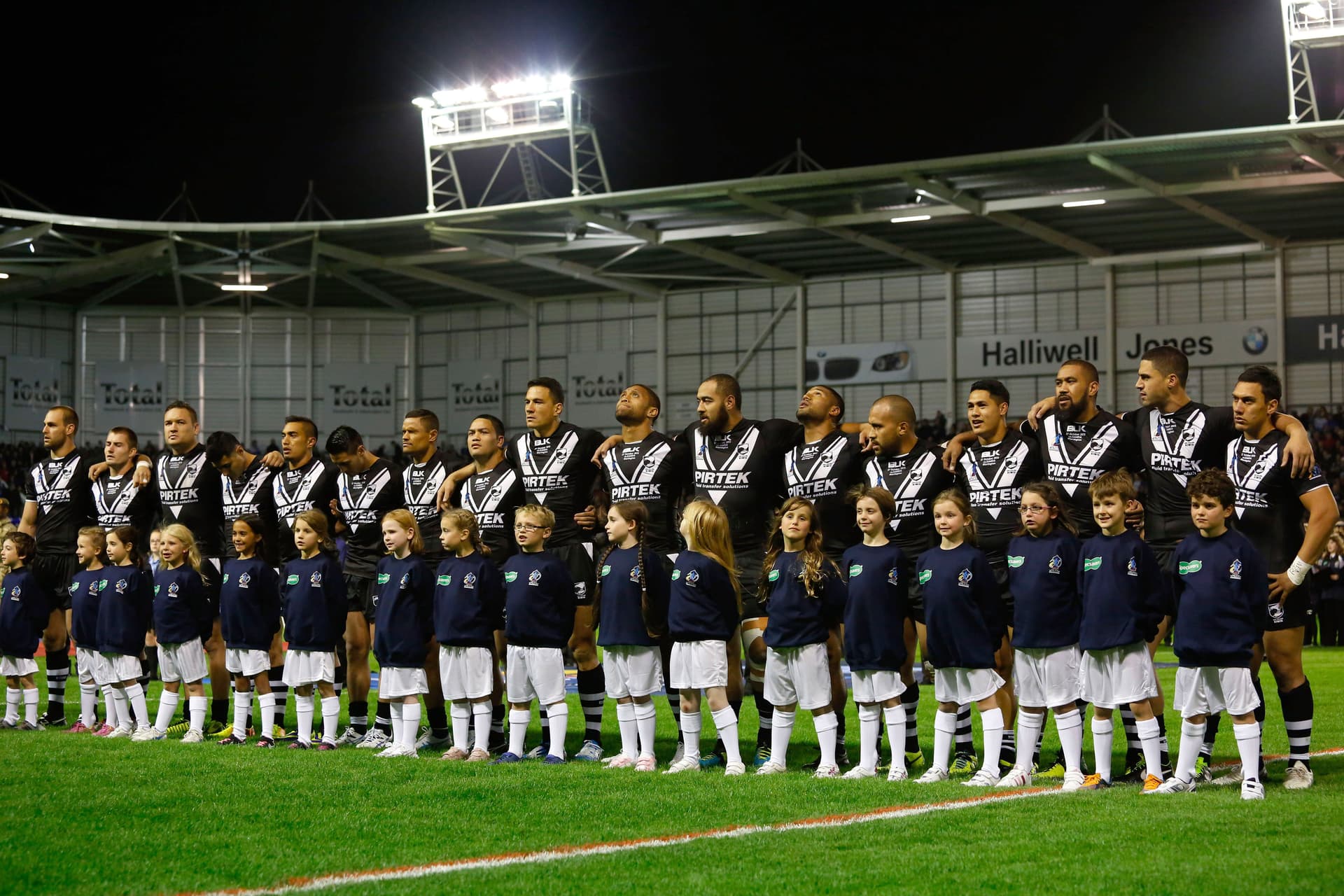
New Zealand players line-up before the Rugby League World Cup//Getty Images
There are several offshoots of rugby football’s two codes: rugby league and rugby union. SportsBoom breaks down the number of players in rugby league and contrasts the sport with rugby union. Sevens rugby, touch rugby, and beach rugby are other popular rugby football codes, all with different numbers of players per team. This is what we found.
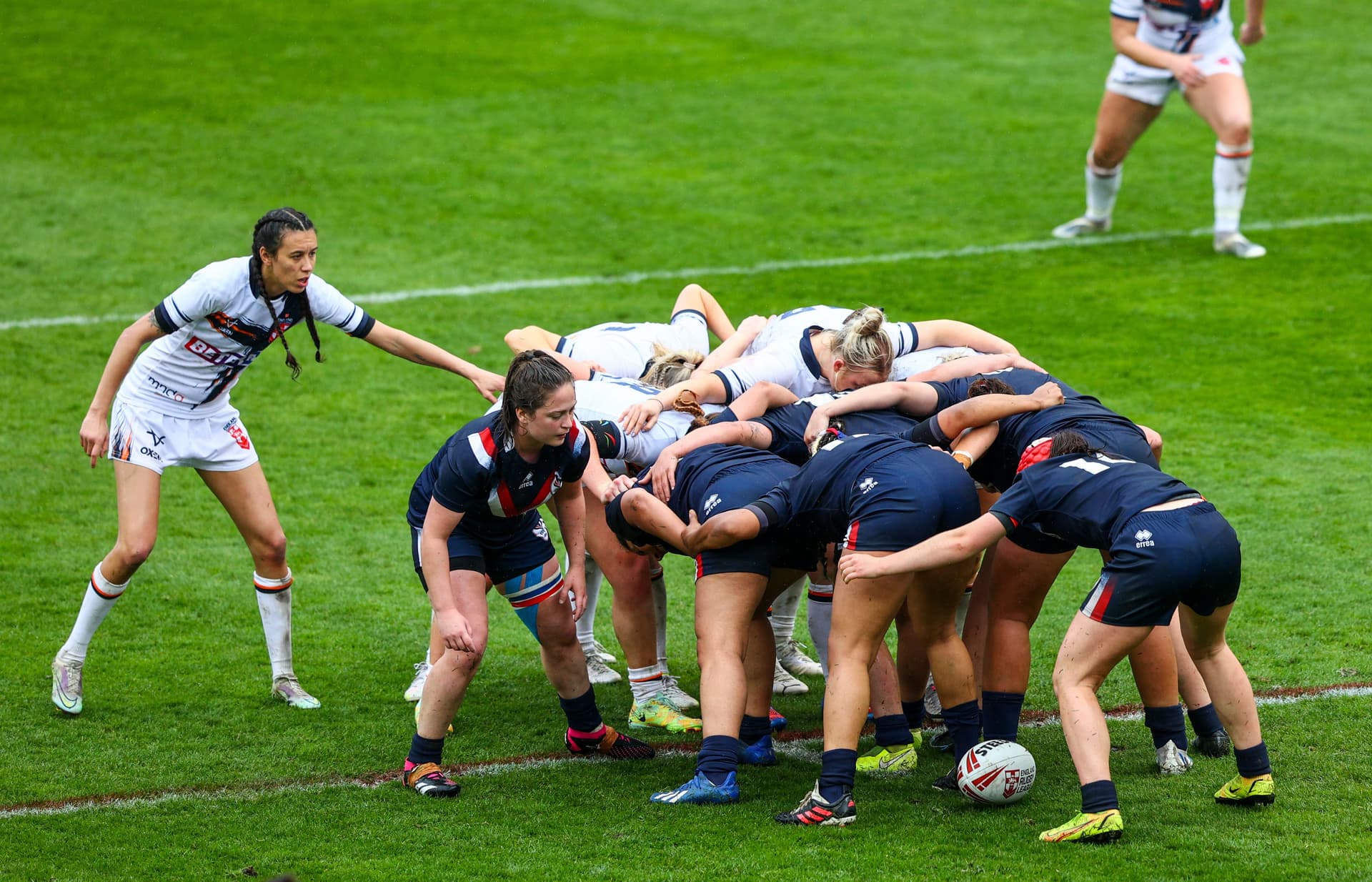
England and France take part in a scrum//Getty Images
Why Are There Different Numbers of Players in Rugby League and Rugby Union?
Rugby league has thirteen players on the starting team, with four substitutes. Rugby union has fifteen starting players and eight reserves. There are more substitutes because of the importance of the scrums. The front row in rugby union has a specific skill set not needed in rugby league.
The two missing players in rugby league are forwards. Both codes use seven backline players. Rugby union has eight forwards, and rugby league has six. There are no flanks in rugby league because there are no rucks. Instead, rugby league uses a play-the-ball system. Each team is allowed six phases during attacks before kicking the ball away or scoring before the ball is turned over to the defending side.
Numbers of Players in Rugby League and Rugby Union
| Rugby | Forwards | Backs | Total |
| Rugby League | 6 | 7 | 13 |
| Rugby Union | 8 | 7 | 15 |

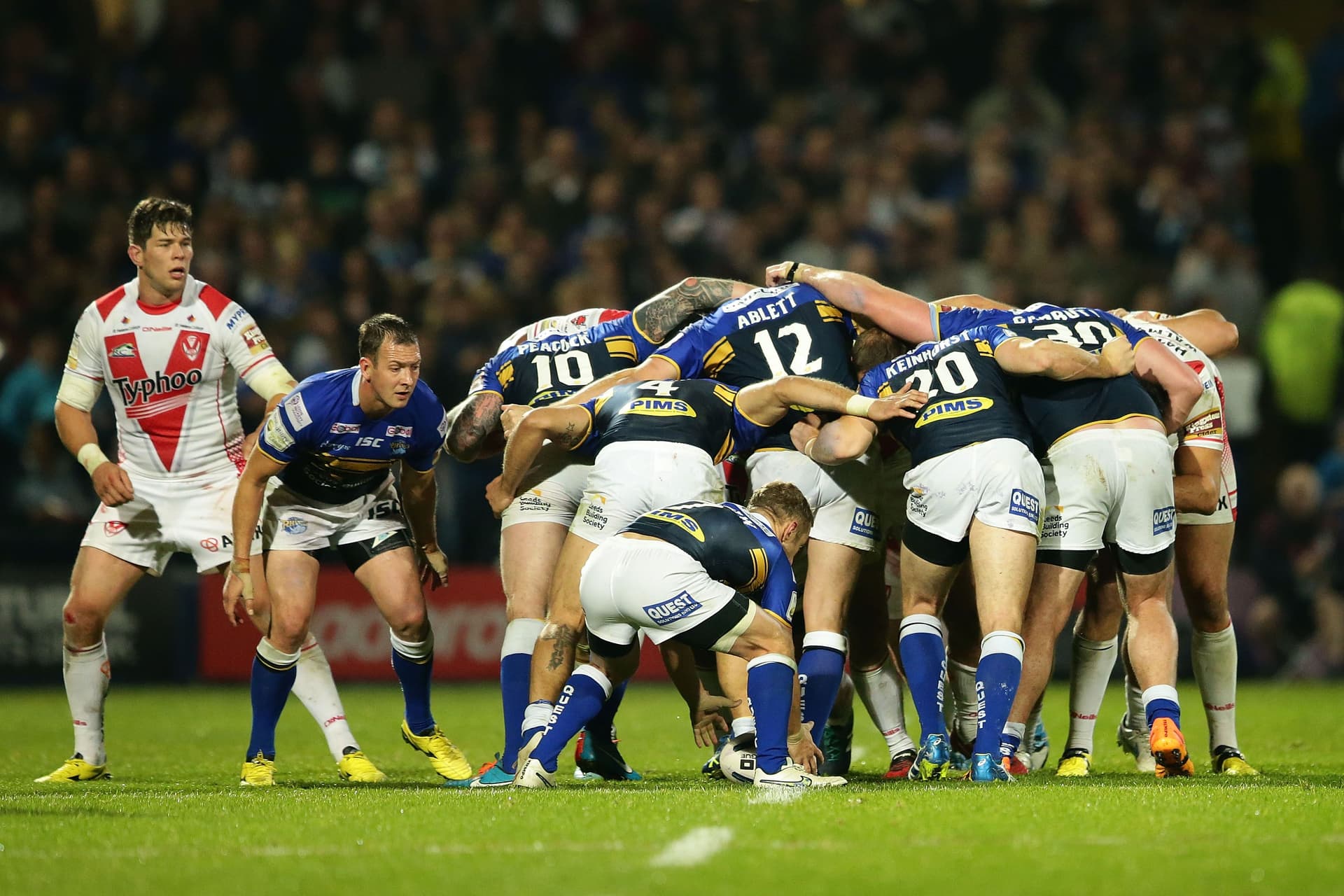
Leeds Rhinos and St Helens in the scrum//Getty Images
The number of substitutes varies. The junior age group (school and club) has fewer replacements because of the number of teams and playing numbers. Schools have several teams per age group, so there is no need for reserves. Instead, players from lower-level sides stand in for injured players of the high-ranked teams.
In senior rugby, the eight substitutes can be any mixture of forwards and backs. The forwards always outnumber the backline players because of the set-pieces (kick-offs, drop-outs, scrums, and lineouts). Certain positions in the forwards and backline are specialised.
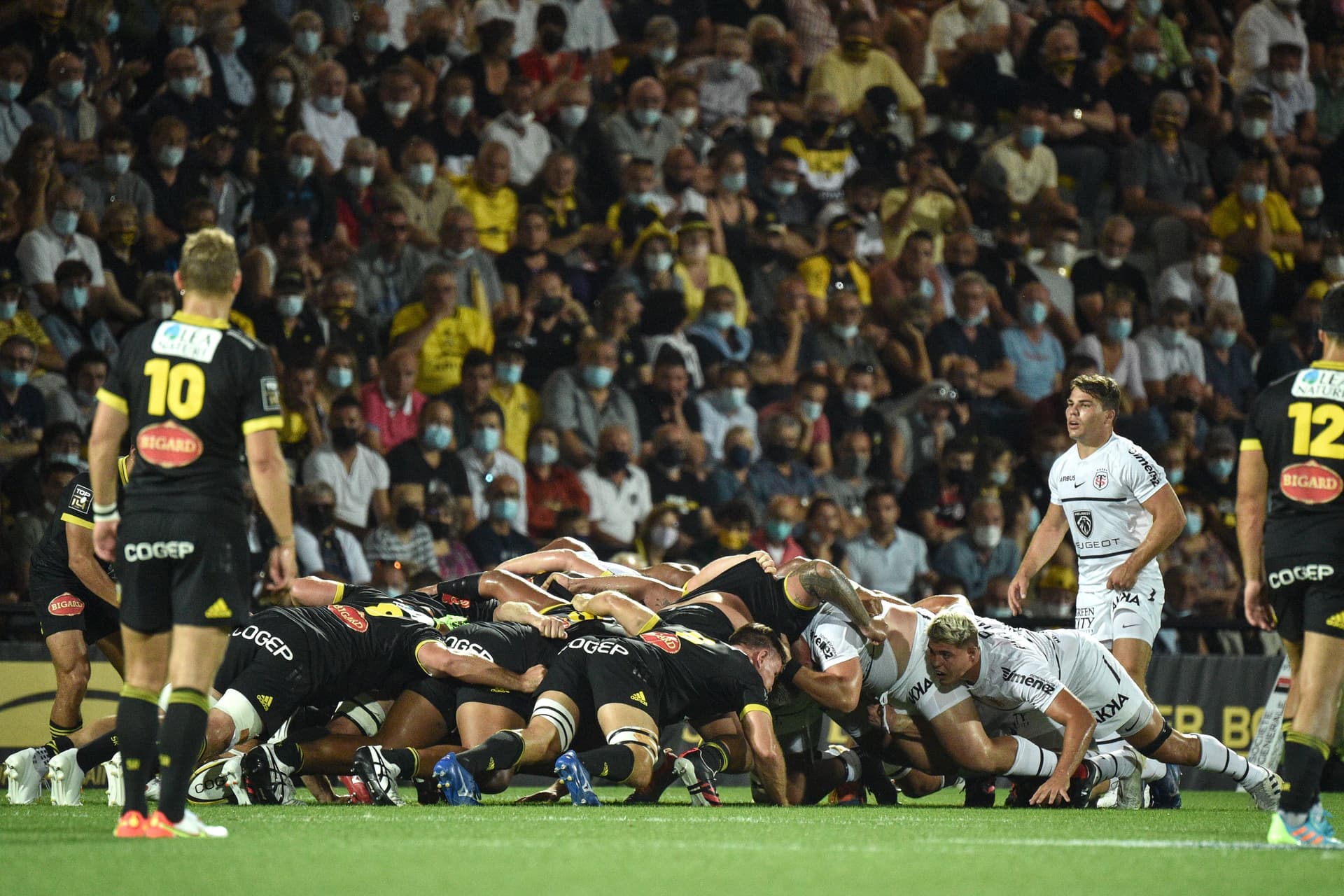
A scrum during the Top 14 match//Getty Images
The entire front row is specialised, although a tighthead prop can often play loosehead, while the latter cannot. Although similar, the blindside and openside flanks are specialised. One attacks the rucks to slow the opposition while trying to turnover possession. The blindside flanker must be excellent at carrying and cleaning out the rucks.
Several backline positions are specialised, but versatile backline players can stand in if they have the required skillsets of the scrumhalf and flyhalf. Fullbacks are experts under the high ball, good at reading defensive weakness, and often must be able to kick for poles and out-of-hand.
Overview of Players in Rugby League and Rugby Union
| Forwards / Backs | Rugby League Positions: Names & Shirt Numbers | Rugby Union Positions: Names & Shirt Numbers |
| Front Row Forwards | Front Row: Props (8 &10) Hooker (9) | Loosehead Prop (1) Hooker (2) Tighthead prop (3) |
| Second Row | Second Row (11 & 12) | Locks / Second Row (4 & 5) |
| Loose Forwards / Back Row | Lock / Loose Forward (13) | *Blindside Flanker (6), *Openside flanker (7) No. 8/Eighth Man/Number Eight/ (8) |
| Half-backs | Half-back / Scrum-half (7) | Half-back / Scrum-half (9) |
| Five-eighth / Stand-off (6) | First Five-eighth / Fly-half (10) | |
| Midfield / Centres | Left Centre (4) / Right Centre (3) | Inside Centre / Second Five-eighth (12) Outside Centre (13) |
| Wings | Left Wing (5) / Right Wing (2) | Left Wing (11) / Right Wing (14) |
| Fullback | Fullback (1) | Fullback (15) |
A History of Numbers of Players on a Rugby Team
Rugby football was codified in the mid-nineteenth century in England and Scotland. The first laws were written by students at Rugby School in 1845. Another important event in the early years of rugby was the decision by Blackheath F.C. to leave The Football Association (FA) in 1863.
Rugby had up to twenty players per team until the mid-1970s when Oxford and Cambridge University decided to field fifteen players in a rugby union team in 1875. Twelve months later, the International Rugby Football Board (IRFB) chose to keep this number of players indefinitely. But in 1893, the IRFB battled a philosophical schism between amateur and a professional sport.
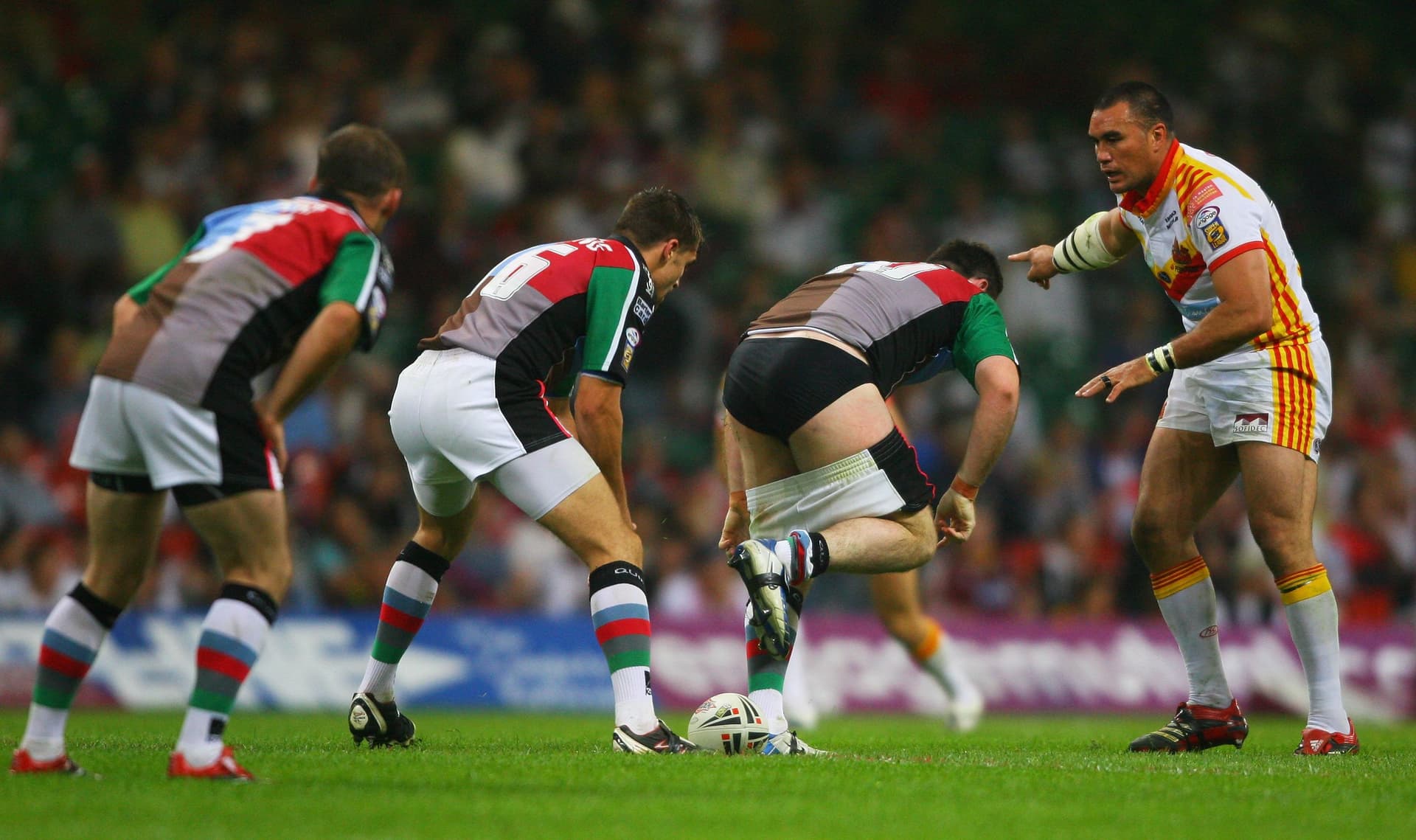
Daniel Heckenberg plays the ball with his shorts round his knees//Getty Images
Fissures developed in rugby. In 1895, rugby split to form two separate codes. League went professional three years later, in 1898. Union was an amateur sport for a century until after the 1995 Rugby World Cup in South Africa when rugby union went professional. Both codes used fifteen players until 1906, when the Northern Rugby Football Union (NRFU) changed the rules from fifteen to thirteen players for rugby league. It was not the only difference between rugby league and rugby union.
he NRFU decided against rucks. They opted against rucks for ‘play-the-ball’ after a tackle. This shift away from the breakdown meant flankers were no longer needed, hence thirteen from fifteen. Rugby league went professional, and the players made excellent salaries.
Because of fewer players, reserves are fewer. Sevens rugby uses rugby union rules, especially keeping the ruck instead of putting the ball between a player’s legs after being tackled. Touch rugby, however, uses rugby league-style rules of ‘play-the-ball’ after a player is touched by the opposition.
Sevens Rugby Numbers & Position
| Number | Position | Field Position |
| 1 | Prop | Forward – Front Row |
| 2 | Hooker | Forward – Front Row |
| 3 | Prop | Forward – Front Row |
| 4 | Scrumhalf / Halfback | Back |
| 5 | Flyhalf / Stand-off / First Five Eight | Back |
| 6 | Centre | Back |
| 7 | Wing | Back |
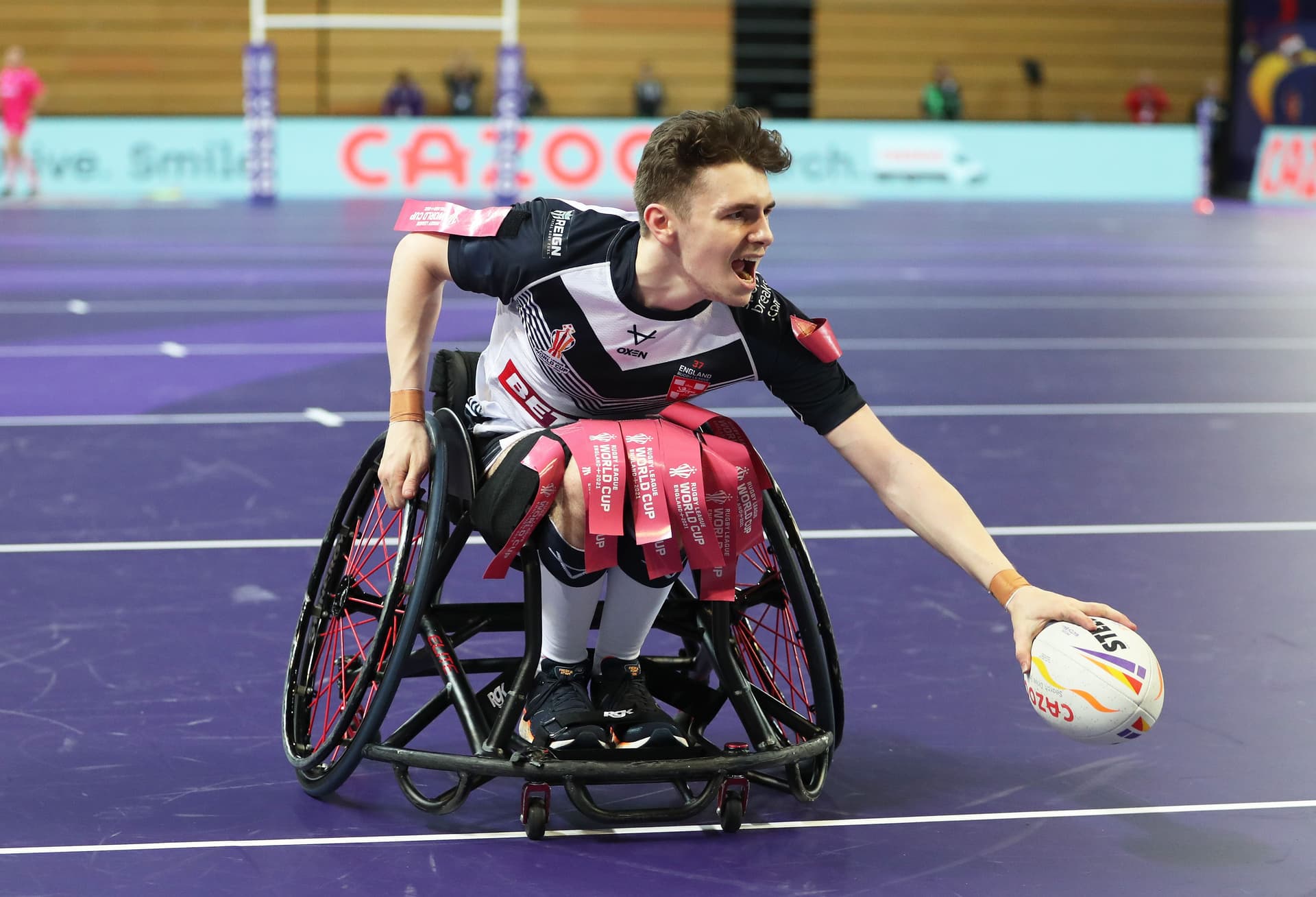
Rob Hawkins of England//Getty
How Many Players in Other Rugby Codes?
There are several versions of rugby. The three professional codes of rugby football are rugby union, rugby league, and Sevens rugby. Each code has different numbers of players that make up the starting team and the number of replacements. Disabled athletes compete in wheelchair rugby, which is a Paralympic sport.
Beach and Rugby 10s are two informal versions of rugby football, often played by older players. It is an entry-level form of rugby for schoolboy rugby from eight to eleven years of age. Tens is played at clubs and schools and in social tournaments for amateurs and retired professionals.
All codes have different variations on the rules, terminology, and points-scoring systems. Sevens Rugby and wheelchair rugby are Olympic sports, while beach rugby is an offshoot of touch rugby.
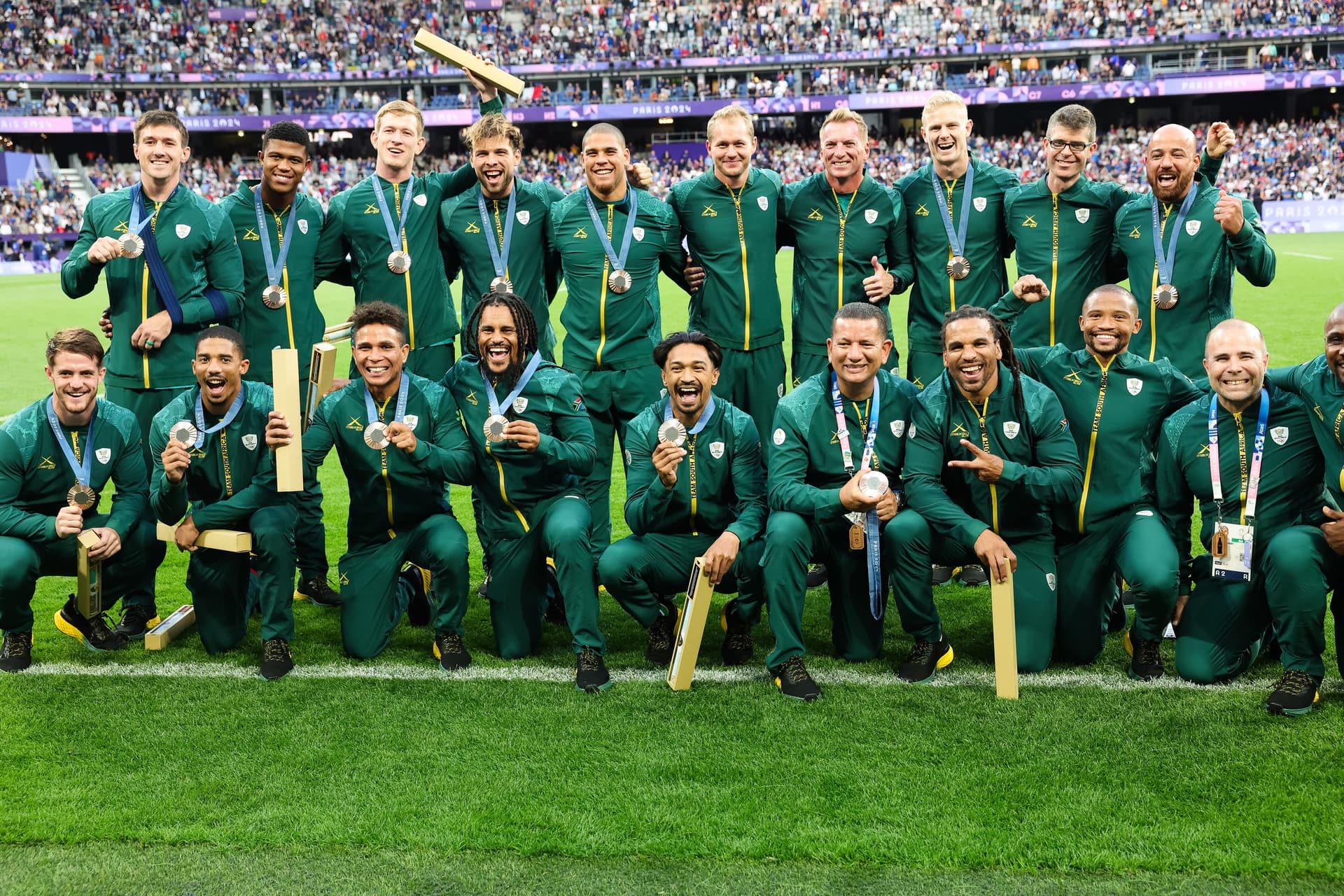
South Africa celebrate winning Bronze Medals during the Paris 2024 Olympic Games//Getty
Seven Rugby
All three offshoot codes have varying numbers of substitutes. Sevens rugby has seven starters and five reserves on the bench. Sevens is the most popular form of rugby after rugby league and rugby union. Sevens has its own World Series event, a Rugby World Cup, and is a Commonwealth Games and Olympic Games sport. Sevens is the most competitive of all rugby codes because the coefficient of the teams worldwide is small.
Touch Rugby
Touch Rugby is one of the non-contact versions of rugby. There are six starters, but the substitutes vary on the formality of the leagues or competitions. Touch Rugby is a social game, often with unlimited subs, except for formal regional or world tournaments. The number of subs is usually limited to six.
Touch rugby is perfect for keeping fit and honing skills. It is the most popular social form of rugby. Due to the non-contact nature of the sport, men, women, and children can play on the same teams. ‘Flag football’ is the American Football version of touch rugby. Instead of touching a player to form a new set of phases, players attempt to pull at flags tied to players’ shorts.
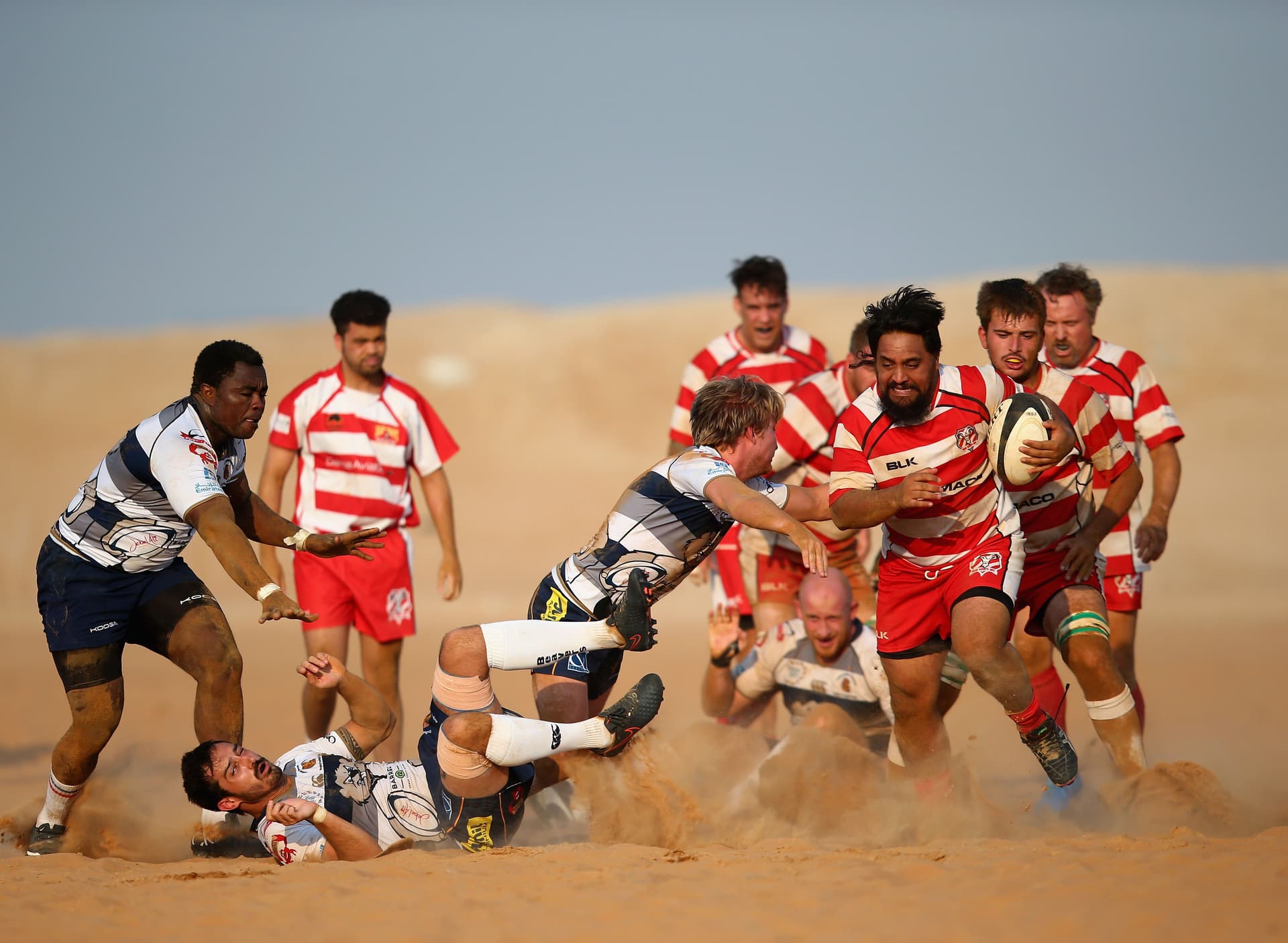
Solomon Masters breaks away from Kane Monaau//Getty Images
Beach Rugby
Beach rugby is a popular amateur pastime. Beach rugby players vary from four to seven players. Substitutes also vary depending on the tournament and the numbers available. However, beach rugby must always have at least two subs in competitions. Beach rugby can have mixed teams, but only if it is a form of touch rugby. Contact beach rugby exists, as well as nude beach rugby.

Kaylan Geekie is a sports fanatic. He attended Durban High School before moving to Scotland, where he lived for 15 years. During his time in the United Kingdom, Kaylan graduated with a first-class BA Honours Degree in Sports Journalism at the University of the West of Scotland. Kaylan worked for nine years as the Match-Day Editor of SuperXV.com, reporting on Super Rugby, The Rugby Championship, the 2015 Men's Rugby World Cup and the 2017 British & Irish Lions series for the website.