
Football
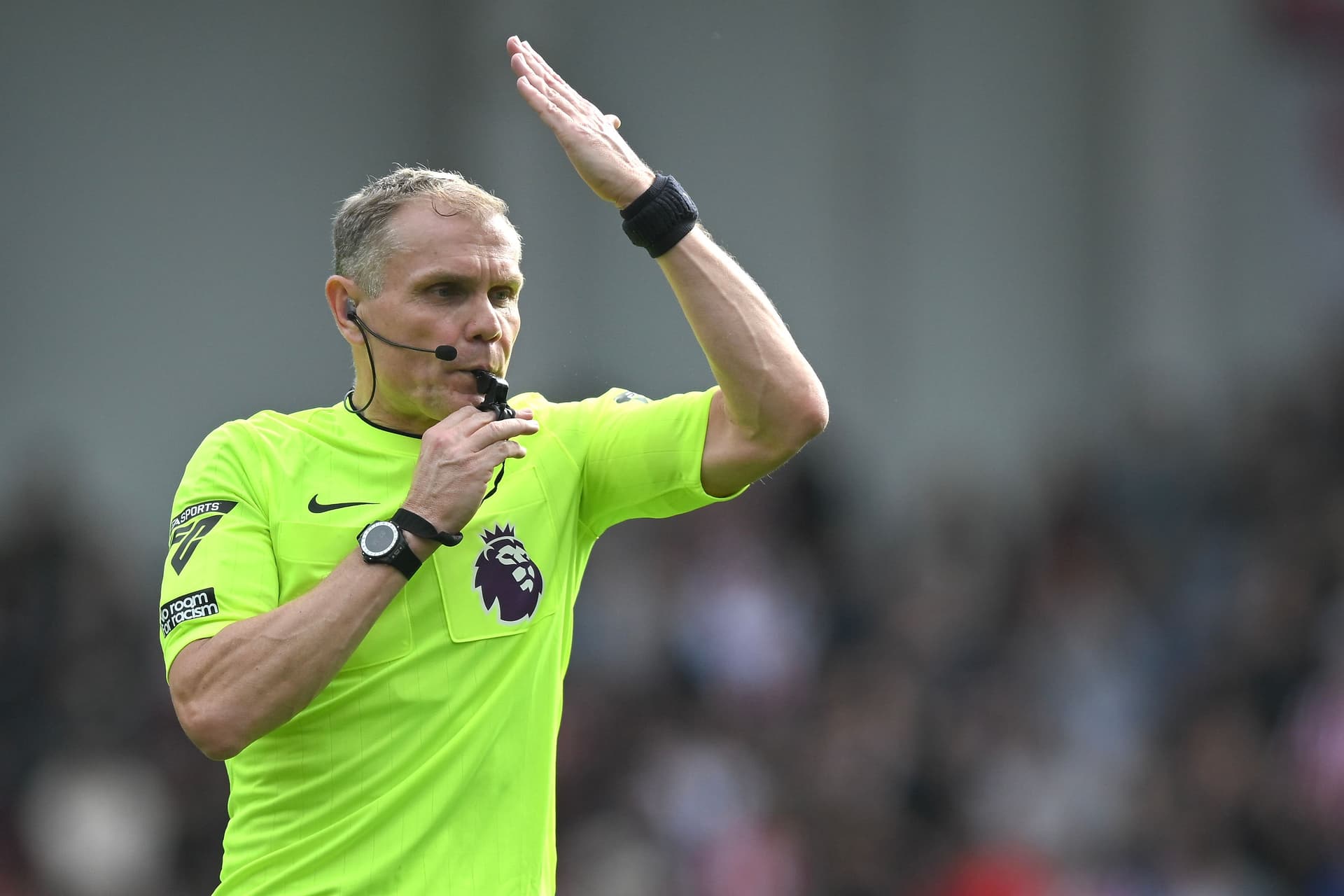
‘Supporters Feel Left Out’ — Former Premier League Referee Graham Scott Calls For Major VAR Change
Credit: Getty Images
There has been huge debate around VAR once again following the controversy at the London Stadium yesterday, where Callum Wilson was denied a dramatic 95th-minute equaliser against league leaders Arsenal.
The goal was initially awarded by the on-field referee before being overturned after a lengthy VAR review, prompting fierce criticism from pundits including Gary Neville, who labelled it the “biggest moment in VAR history”.
Amid the latest storm surrounding the technology, former Premier League referee Graham Scott has reflected on his own experiences working with VAR, outlining both the benefits and frustrations of the system during an exclusive interview with SportsBoom.
Scott Reflects On VAR
Scott, who began refereeing in 1997 before retiring in 2025, was among the first officials to work with VAR after its introduction into English football. Having witnessed the game evolve over nearly three decades, he believes the technology has improved decision-making overall, but admits perfection remains impossible.
“Well, I think that we hoped that by checking incidents on video quickly, where you would more likely get to the best decision, and we do, but people expect perfection, and even though we said at the start that VAR would not produce perfection, it would only improve the number of decisions that were correct,” Scott told SportsBoom.com.
Scott believes officials have become far more efficient and confident in using the system compared to its early days.
“People don’t get it but we are much quicker in making decisions as VAR. We are more confident in more situations. We have a better understanding of how to use slow motion carefully because there is a risk sometimes with looking at a still photograph, a still image, or a very slow motion tackle, and it can look worse. And sometimes it can make a bad tackle look actually it's okay. So we've got better at that, and at choosing the best angles to review each situation,” Scott added.
“So I think there are improvements. There is more accuracy, and it's not taking quite as long, but it is still the case that some decisions take a long time, and that for supporters in the stadium, that price is a very high price to pay because they do not know what's going on, and they can be very frustrated at being left out of the process,” Graham added.
The Hidden Pressure Of Working On VAR
One of the biggest complaints from supporters is that VAR interrupts the rhythm and emotion of matches, especially when goals are involved. However, Scott believes the issue is often exaggerated.
“Not really, I think it has the time that that happens is when there is a goal and you have, and there are several, maybe two or three different situations before the goal that the VAR has to check. So you may have a potential foul, a potential offside, and a potential handball by the goals scorer, for example,” he added.
“And they all have to be checked. This can take a long time. It can take one minute, two minutes, or even three minutes. occasionally longer. And that is very, that does change the atmosphere, because people want to celebrate the goal and they want the game to restart. And, of course, that isn't always the case. In the normal run of the game, it doesn't disrupt a plan,” the former referee said.
Scott also revisited previous comments where he described VAR as an “unpleasant experience” for officials working behind the scenes.
“Because you don't know in the moment how your decision has been received. So, as a referee, when you make a decision, there is a reaction to that decision. and we become accustomed to understanding whether that reaction is a genuine sense that you are wrong, or players obviously will try and convince you you're wrong, but you know that they are. It's confected, it's not their genuine view,” he said.
“As VAR, you don't know. You are sitting in a studio, and you don't know how the decisions are landing. And that is really quite difficult to process, and it's what makes it so difficult."
Despite another season full of controversy, Scott insists the number of outright VAR errors remains relatively small.
“I think it’s a combination of factors. There have only been two mistakes when the VAR has changed an on-field decision or recommended a change to an on-field decision incorrectly. So what normally happens is the VAR thinks that may think that the decision is wrong, but isn't convinced that it's so obvious that they must intervene,” the former referee said.
Calls For More Transparency In Stadiums
Debate continues over whether VAR should remain in the Premier League at all, but Scott admits he would still prefer to officiate with the technology in place.
“As a referee, I would prefer to keep it because it means that if I make a really bad decision that maybe costs the team the win or a draw, it is corrected. If I'm watching on television, I don't mind VAR because I can get to see the replays, I can start thinking what decision I think should be made. And so on,” the former referee said about this topic.
“But in the stadium for the supporters, I think it's very bad. I think it really spoils the game for them when there is a long delay, and they do not know what's happening, and they're not allowed to see the pictures, and they're only told after the event in very short terms what has just happened. And I think that's a missed opportunity. The supporters should be able to see the pictures and hear what's being said. And then they would feel part of the process and maybe understand the decision, even if they disagree with it,” he concluded.
Comments
1 comment
Decisions sometime is hard on the field not like tv showing
Beyond writing, Xhulio has worked on numerous football development projects as a project manager for international academies, tournaments, and grassroots initiatives, collaborating with organizations such as Valencia CF, Perugia Tournament, and Football for Peace. He has also served as a sports lawyer with EFA Sports Agency and FC Basania, further strengthening his expertise in the legal and administrative dimensions of football.