
Betting News
Could Brazil’s Betting Ban Trigger a Global Gambling Domino Effect?
Brazil has switched off one of the world's fastest-growing regulated betting markets less than two years after it opened. As licensed sites went dark on 6 October, the question for the rest of the industry is no longer whether Brazil matters, but whether anyone else is about to do the same.

SportsBoom offers honest and impartial bookmaker reviews to help you make informed choices. While we may earn commissions through affiliate links, our content remains independent and free from promotional influence. For more information, see our Content Transparency and How We Review pages.
Credit: Getty Images
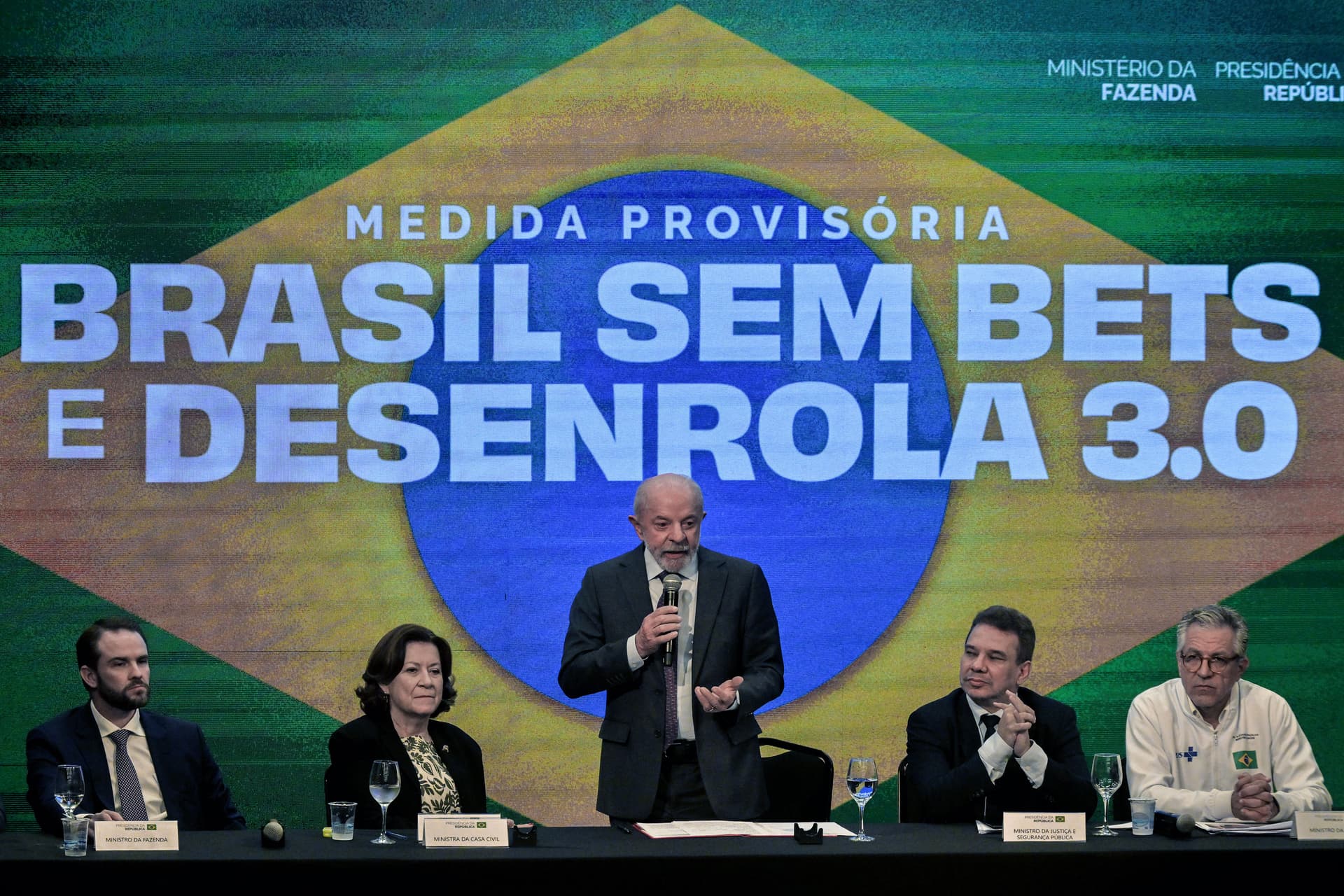
On 25 September, President Luiz Inácio Lula da Silva signed Provisional Measure 1,394, banning the operation, offering, intermediation and advertising of fixed-odds betting nationwide, covering both sports betting and online casino games.[1][2]
Lula called the industry a "cancer" and said Brazil must "remove the tumour" before it kills the country.
The timing was impossible to ignore. The decree landed nine days before the first round of a presidential election Lula is fighting for his political life in.[3] But the consequences stretch well beyond Brasília, into the share prices of London and New York-listed operators, the sponsorship books of football clubs, and the policy debates of governments from Manila to Pretoria.
What has Brazil actually banned?
This is not an advertising crackdown or a tax rise. It is a full prohibition, and it reaches beyond Brazil's borders. The measure covers operators based abroad that take Brazilian customers, bars banks and payment firms from processing bets, and orders app stores and internet providers to block sites.[4]
New deposits stopped on the day the measure was published.
Players had until 11:59pm on 5 October to withdraw, and licensed sites had to be offline from 6 October. Every licence is extinguished after 30 days, with no refund of fees. That means operators lose roughly R$2.55bn (about US$490m) they paid for five-year licences, at R$30m each.[5]
Because Brazil's constitution does not allow criminal offences to be created by provisional measure, prison terms sit in a separate bill. Its draft proposes four to six years for running fixed-odds betting, even under a foreign licence.
Did the gamble pay off at the ballot box?
Not yet. Flávio Bolsonaro, son of the jailed former president, finished the 4 October first round on 47.03% to Lula's 45.16%, defying polls that had the incumbent ahead. The two now meet in a runoff on 25 October.[6][7]
The ban itself is popular. An Atlas and Bloomberg survey found 59.9% of Brazilian adults back it, and by 5 October more than 481,000 people had voted in favour in the Senate's public consultation, against around 80,700 opposed.[8]
That popularity explains why Bolsonaro has not simply promised to reverse it. He called the measure “populist, hypocritical and politically motivated”, but has said he would ban online casinos while keeping sports betting, with football betting as his stated exception.[9]
In other words, both candidates now accept that Brazil's market in its current form is finished. The fight is over how much of it survives.
Who loses most outside Brazil?
The shockwave reached the world's biggest betting groups within one trading day. Brazil only fully regulated online betting in January 2025, but it quickly became one of the industry's most prized growth markets.[10]
| Company | Brazil exposure | Reaction |
|---|---|---|
| Allwyn (36.75% of Kaizen Gaming, owner of Betano) | Brazil is Betano's largest market; Betano holds around 25% share | Scrapped annual margin guidance; Betano preparing legal action over its five-year licence |
| Entain (Sportingbet) | About 5% of 2026 online NGR | Online NGR growth cut to 4% to 6%; EBITDA now at the lower end of £910m to £960m; shares fell 4% |
| Flutter (Betnacional) | About 1% of group revenue at end of 2025 | Expects a $70m revenue and $20m EBITDA hit if closed for the rest of 2026; Brazil goodwill of $539m on the books |
| Evolution | About 9% of sales | Shares fell |
| Kambi | Low single digit % of revenue | Expects limited impact |
The pain spreads down the supply chain too. Better Collective, Bragg and Playtech were among the stocks that fell after the announcement. Affiliate sites promoting the 20 most advertised brands dropped from 715 to 418 in a single week, and Brazil's esports scene faces the same sponsorship cliff as football.
The hit lands at an awkward time. Entain had already been removed from the FTSE 100 in September after a 42% share price fall over 12 months, while UK-facing operators are absorbing higher gambling taxes.[11]
What happens to Brazilian football?
Football is the most visible casualty. Fourteen of the 20 clubs in the top flight Brasileirão carry a betting brand as main sponsor, and the measure orders all betting advertising and sponsorship material to come down.
Broadcaster Globo reports that the main clubs received R$1.1bn ($212m) from betting firms in 2025. Grêmio warned that the change could push many clubs towards insolvency and open the door to illegal betting. Lula's response is that betting accounts for "just" 7% of club revenues.
For global sponsors, this is a familiar story with a new twist. Premier League clubs agreed voluntarily to drop front-of-shirt gambling sponsors, with years of notice before it took effect.
Brazil has done it overnight, by decree, with contracts still running.
Will the ban survive?
It is far from settled, but the measure is designed to do damage even if it falls. Provisional measures run for 60 days, extendable once, and Congress must convert them into law within that window. Lula says he doubts lawmakers will overturn it.
The catch for operators is that licences die on day 30, long before Congress has to vote. On a plain reading of Article 62 of the constitution, acts carried out while a lapsed measure was in force can stand, so operators could lose their licences even if the ban is never approved.
The courts offer the industry its best hope. The ANJL and IBJR have asked the Supreme Federal Court to suspend the measure as unconstitutional, and bet365 has called the ban unconstitutional too.
But the court has indicated that any challenge will be heard after the election. One analyst cited in the Philippines put the odds of the ban surviving at 85%.[12]
Where does the demand go?
This is the number every other regulator will be watching. Demand for online betting and casino in Brazil fell 78.2% in the week to 4 October, according to analytics firm Blask. That looks like a policy working, but the index leans heavily on interest in known brands, and the licensed brands are the ones that disappeared.
The early signs from the unlicensed side point the other way. Monitoring by Bet Legal counted 102 illegal platforms on 21 September, 331 the day before the announcement and 575 the day after. The IBJR's warning is blunt: the ban does not remove existing demand, and players who move offshore lose the protections of the regulated market.
If Brazil's illegal market fills the gap quickly, the ban becomes a cautionary tale. If enforcement through payment blocking and app store removal actually holds, it becomes a template.
Who could follow Brazil?
The likeliest copycat is not in Latin America at all. The biggest knock-on effect elsewhere is more likely to be on investor confidence than on copycat legislation.
| Market | Likelihood of a similar ban | Why |
|---|---|---|
| Philippines | High | Several senators have filed total ban bills covering local and offshore sites, e-wallets and advertising; President Marcos has said he is looking at calls for a ban; regulator PAGCOR opposes, warning of black market growth |
| Latin America (Colombia, Peru, Chile, Argentina) | Low | Experts expect investment to move towards markets with predictable rules, with Colombia and Peru best placed, and warn against assuming neighbours will copy Brazil |
| South Africa | Low for a ban, higher for ad curbs | Sports betting is licensed provincially rather than nationally, making an overnight shutdown unlikely; advertising and sponsorship are the more likely pressure point |
| UK and Europe | Very low | The direction of travel is higher tax, affordability checks and ad limits, not prohibition |
The Philippines is the one to watch
The parallels with Brazil are striking. A Senate committee has been weighing bills that propose either total prohibition or tighter rules. Its chair, Erwin Tulfo, opened hearings calling for an immediate end to online gambling and said authorities had identified almost 12,000 illegal sites since 2022. The country has form, having already banned e-sabong in 2022 and offshore POGO operators since.[13]
Brazil hands Manila's ban camp a live case study and a political script: frame gambling as a household debt crisis, act by executive power, and dare legislators to vote against it. Philippine operators are already feeling the effects, with some having targeted Brazil as a growth market.
Latin America may gain, not follow
For the rest of the region, Brazil could prove more of an opportunity than a warning. Colombia, the first Latin American country to regulate online betting in 2016, and Peru, with the region's highest participation rate, are positioned to absorb redirected investment.
The real export is a risk premium
The most lasting global effect may be on how operators' price political risk. Brazil revoked paid, fixed-term federal licences with no compensation. One lawyer warned that foreign investors would now conclude that even a paid federal authorisation offers no legal certainty in Brazil. Expect boards to demand clearer exit protections, cheaper licence fees or faster payback in every emerging market they enter next, from Africa to Asia.

Meet Louis Hobbs, our esteemed authority on all matters sports-related. With a wealth of knowledge and experience, Louis effortlessly emerges as our go-to expert. His particular expertise in the realms of darts and snooker sets him apart and brings a level of insight that goes beyond the ordinary. Louis also holds a deep affection for all things related to US sports, with a special emphasis on basketball and American football, which stand out as his particular favorites. His content may not resonate with you, if you don't consider Lamar Jackson the most skilled player in the NFL.
Comments
0 comments
No comments yet. Be the first to share your thoughts!
References
- 1.BBC - Brazil's Lula bans online gambling ahead of presidential election
- 2.Yogonet - Brazil betting ban: What the provisional measure actually says
- 3.The Rio Times - Brazil Bans Online Betting: Deposits Stop, Sites Go Dark on 6 October
- 4.FairGambling - Brazil Betting Demand Falls 78% in a Week as Gambling Ban Hits
- 5.The Rio Times - Brazil Betting Ban: Operators Lose US$490 Million in Licence Fees
- 6.CNBC - Bolsonaro beats expectations in Brazil presidential vote, will face Lula in runoff
- 7.Americas Quarterly - REACTION: Flávio Bolsonaro and Lula Advance to Brazil's Presidential Runoff
- 8.European Gaming - More than 480,000 back Brazil betting ban in Senate consultation
- 9.BNLData - Flávio Bolsonaro promises to ban online betting and the "little tiger game"
- 10.Reuters (syndicated via KFGO) - Betting firms Flutter and Entain warn of hit from Brazil's online betting ban
- 11.Shane the Gamer - Brazil's Betting Ban Puts FURIA and Brazilian Esports Sponsorships on the Clock
- 12.Daily Tribune - Brazilian gambit unravels
- 13.journalnews - Senators divided over online gambling