
Motor Sports
Understanding DRS in F1: How Drag Reduction System Works
A flap with immense attributes to it. That is the DRS is in gist for you, a device that helps Formula 1 drivers overtake easily. We explore what it is and how it works.

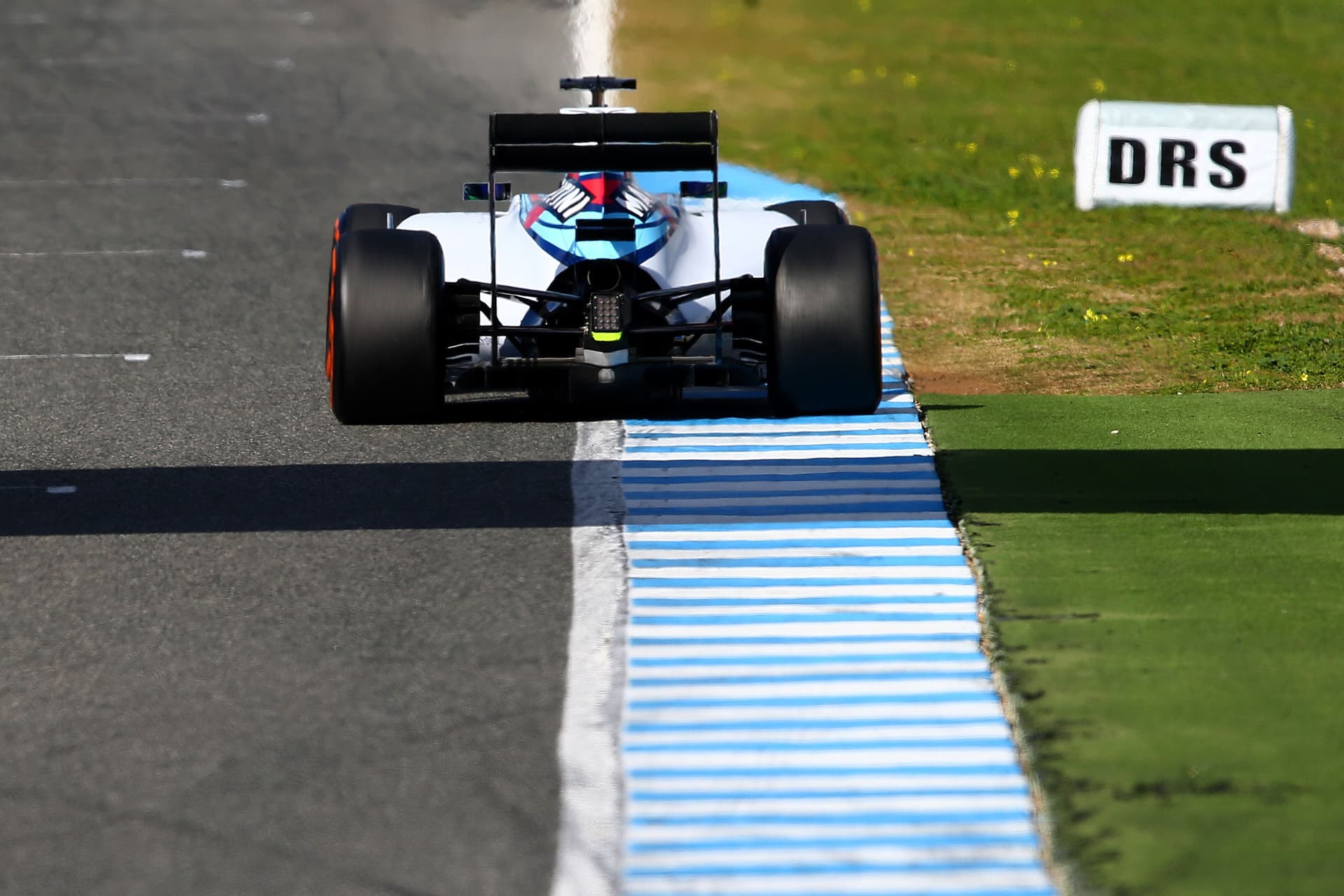
A DRS sign indicating the start of a DRS zone//Getty Images
The Drag Reduction System, or DRS in short, was introduced in 2011 and is a much talked about and controversial device.
The device aids drivers in overtaking by reducing drag levels at top speeds when a driver is within a second of the driver in front of them.
This is done by releasing a flap in the rear wing. We explore how this device which is somewhat a source of contempt to in Formula 1 works.
What is the DRS in Formula 1?
The DRS is a device used to aid Formula 1 drivers to overtake introduced in 2011. Its primary purpose is to make overtaking easy as was necessitated by several reasons.
Prior to its introduction in 2011, the turbulent air produced by Formula 1 cars had an impact on the aerodynamic of the car following behind.
This led Formula One Management to look for a solution, particularly so prompted by what happened at the 2010 Abu Dhabi season finale.
Fernando Alonso was unable to drive past Vitaly Petrov who was considerably slower in his Renault, ultimately losing out on the championship.
How Does it Work?
The DRS is a flap located at the rear wing of a Formula 1 car, activated by the driver pressing a button located on the steering wheel.
The flap in action serves to reduce drag and increase straight-line speed advantage which affords them an opportunity to overtake opponents or improve lap time.
The device’s flap when closed serves a totally different purpose as it creates downforce that pushes the car into the ground thus improving the grip for cornering.
It therefore presents a duality of opportunity upon alteration of the flap determined by the circumstances or position on the circuit.
At What Point Can It Be Utilised in a Race?
It cannot be used on the whim though. A driver can’t just feel like overtaking and hit the magic button to victory. Absolutely not.
The system may be used at designated places known as DRS Zones. The respective Formula 1 tracks have different DRS Zones usually determined by the FIA ahead of races.
To give more clarity, the zones are straight stretches on a race circuit, so don’t for some weird reason expect to see one on a curve.
DRS Detection Points
DRS Zones are preceded by the detection points. It is after these points a driver can activate or hit the magic button to gain an advantage in a race.
The driver behind must be within one second of his opponent to use the device and it does not matter whether the car in front is a direct opponent or a lapped car.
The Restrictions On Using the DRS
The DRS cannot be used under two conditions in Formula 1 races. The first two laps of a race and during neutralisation. During these opening stages, cars are usually close to each other and for safety reasons the flap may not be activated.
The second condition is weather related. Under rainy or wet conditions, the DRS is not permitted because the car needs more downforce to avoid instances of a ‘slide’ that might result at fast speeds.
The Controversy Behind DRS
Since its introduction in 2011 the DRS has been a point of contention among racing enthusiasts with varying opinions on its use.
Many critics believe that its ability to help drivers easily overtake and increase speed whilst at it has created some sort of artificial racing.
This is believed to be true because most are of the opinion that Formula 1 drivers should have the skill to naturally overtake without assistance from a device. However, with modern cars that is cause for more debate.
Other concerns relate to safety because of the speed produced by the system which is thought to have the potential to cause accidents.
The DRS is also seen as a gimmick by most who suggest that drivers in the past could overtake easily without its use.
What the Racing Purists Say
Juan Pablo Montoya is one such person who is not for the idea of DRS. The former Formula 1 driver famously implied that it’s like ‘giving Picasso Photoshop’.
This can obviously be viewed as a snide remark in the believe that racing should be pure without any assistive devices. Montoya is of the opinion that overtaking itself is an art.
Some believe that it is a necessary evil that helps neutralise the advantage of the car ahead over the car immediately behind it.
A Look at Some Circuits and the Number of Their DRS Zones
The different race circuits the world over have different DRS zones. The Melbourne Street Circuit for instance is one known to have a lot of them whilst others like the Monte Carlo Street Circuit only have one.
| CIRCUIT | EVENT | DRS ZONES |
| Melbourne Street Circuit | Australian Grand Prix | 4 |
| Imola Circuit | Emilia Romagna Grand Prix | 1 |
| Bahrain International Circuit | Bahrain Grand Prix | 3 |
| Monte Carlo Street Circuit | Monaco Grand Prix | 1 |
| Suzuka International Racing Course | Japanese Grand Prix | 1 |
| Autodromo Jose Carlos Pace (Interlagos) | Sao Paulo Grand Prix | 2 |
| Jeddah Corniche Circuit | Saudi Arabian Grand Prix | 3 |
| Shanghai International Circuit | Chinese Grand Prix | 2 |

The Monaco Grand Prix at the Monte Carlo Street Circuit has only one DRS Zone because the start-finish straight is the only straight deemed safe for the use of the DRS.
FAQs
Why was the DRS introduced?
Primarily the DRS was introduced to aid drivers in overtaking which had become somewhat of a challenge until its introduction.
Does the DRS work all the time?
It is only available during dry conditions and is prohibited on wet conditions.
What is the contention about the DRS primarily about?
Racing purists think that drivers should naturally be able to overtake without any assistance.
When do drivers know when to use the DRS?
A beep will be sounded off to the driver every time they enter a DRS Zone.
Who activates the DRS?
The driver manually activates the DRS by pushing a button on their steering wheel. The placement of the button differs on the various cars based on design.
Comments
0 comments
No comments yet. Be the first to share your thoughts!
Related Resources to Motor Sports
- Moto GP Riders with the Highest Win Percentage When Starting on Pole
- Best MotoGP™ Rider of All Time?
- Who Holds the Most Fastest Laps in Formula 1 History?
- Most Successful F1 Teams: Top Constructors & Championship Wins
- Best Young Drivers to Watch in F1 Today: Rising Talents in 2024
- Top 10 Formula 1 Drivers Ever: Achievements, Wins and Records
- Why F1 Drivers are Weighed After Racing: Key Factors in Racing Regulations
- The Formula 1 Undercut Explained: A Key to Overtaking
- Do F1 Teams Make Money? A Breakdown of Revenue and Costs
- All or Nothing: Does Hamilton Have One Last Chance to Conquer Ferrari?
- Formula 1 2024: New Rules and Regulations Explained
- From Niche Sport to Global Phenomenon-Thanks to "Drive to Survive"?
- Plan Your F1 Viewing: 2024 Season Schedule & Race Times Worldwide
- Your Guide to the 2024 F1 Season: Teams, Drivers, and More!
- Formula 1
- Motor Sports
You might also be interested in

Based in Johannesburg, South Africa, Jimmy holds a Diploma in Journalism and Media Studies. He’s a passionate sports enthusiast with broad knowledge across various disciplines.