
Cricket
Test Cricket Sessions: How Many Sessions Per Day?
If you are confused about sessions in Test cricket, here's all you need to know about them.

SportsBoom offers honest and impartial bookmaker reviews to help you make informed choices. While we may earn commissions through affiliate links, our content remains independent and free from promotional influence. For more information, see our Content Transparency and How We Review pages.
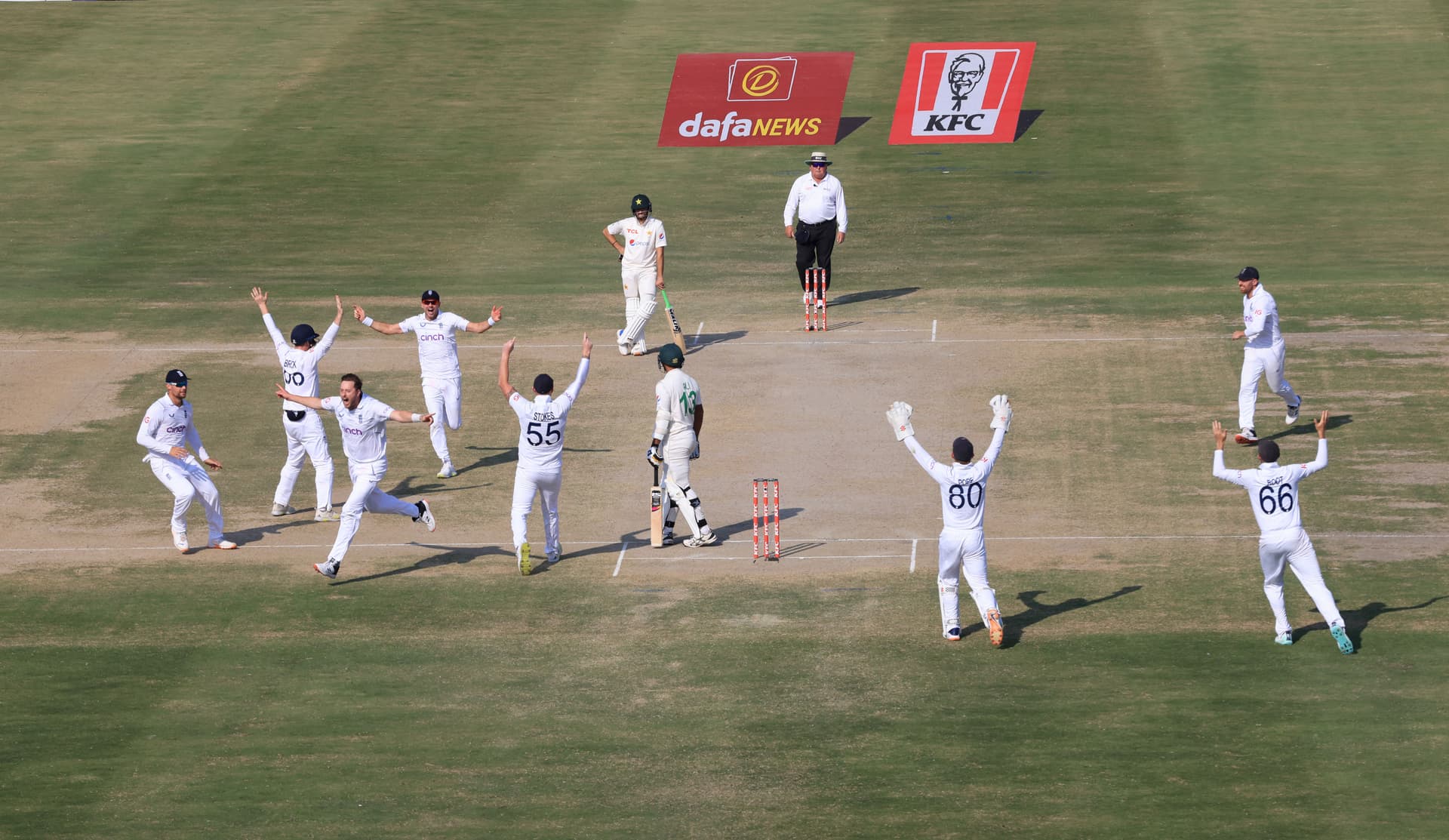
Ollie Robinson of England celebrating//Getty Images
While the shorter formats like ODI and T20 cricket have become more popular over the last two decades, Test cricket, the oldest format of the sport, is still considered the best of the three formats. Played over five days in white clothing, Test cricket features two innings per team, and is the longest format of cricket. Unlike shorter games in which you see batters play attacking cricket, Tests are all about technique and resilience. Winning a Test match or series brings a similar sense of pride which comes with winning a World Cup or any other major tournament, because Test cricket has its own charm which is often missing in the shorter formats.
The answer to the question - which was the first-ever Test match - remains widely debated. But in 1877, an England cricket team travelled to Australia and played two games against the best Australian players. These two matches are now considered the very first Test cricket matches ever played.
Why Test cricket can be confusing for some people
If you aren't big on cricket, Test cricket can seem slightly confusing to you, because it's quite different from the other two formats of the sport. Test matches last for five days, and even after all that time, there can still be no clear winner, which can be hard to understand. The rules are also more complicated, with terminology like "sessions", "follow-on" and "declaration" that aren't used in ODI and T20 cricket. All these aspects can make it difficult for non-cricket enthusiasts to understand the Test format. Sessions, in particular, are a very important part of Test cricket. They provide a breakdown of an otherwise long match.
How many sessions are there in Test cricket?
Each of the five days of Test cricket are divided into three parts, known as sessions. An entire Test match, which comprises of four innings, lasts up to five days, so there are 15 sessions in total. Each day of play begins with the morning session, which is the first of the three sessions. The morning session lasts for around two hours. Players then take a 40-minute lunch break to rest and recharge for the afternoon session. After lunch, the second session (afternoon session) continues for another two hours. This is followed by a tea break of about 20 minutes.
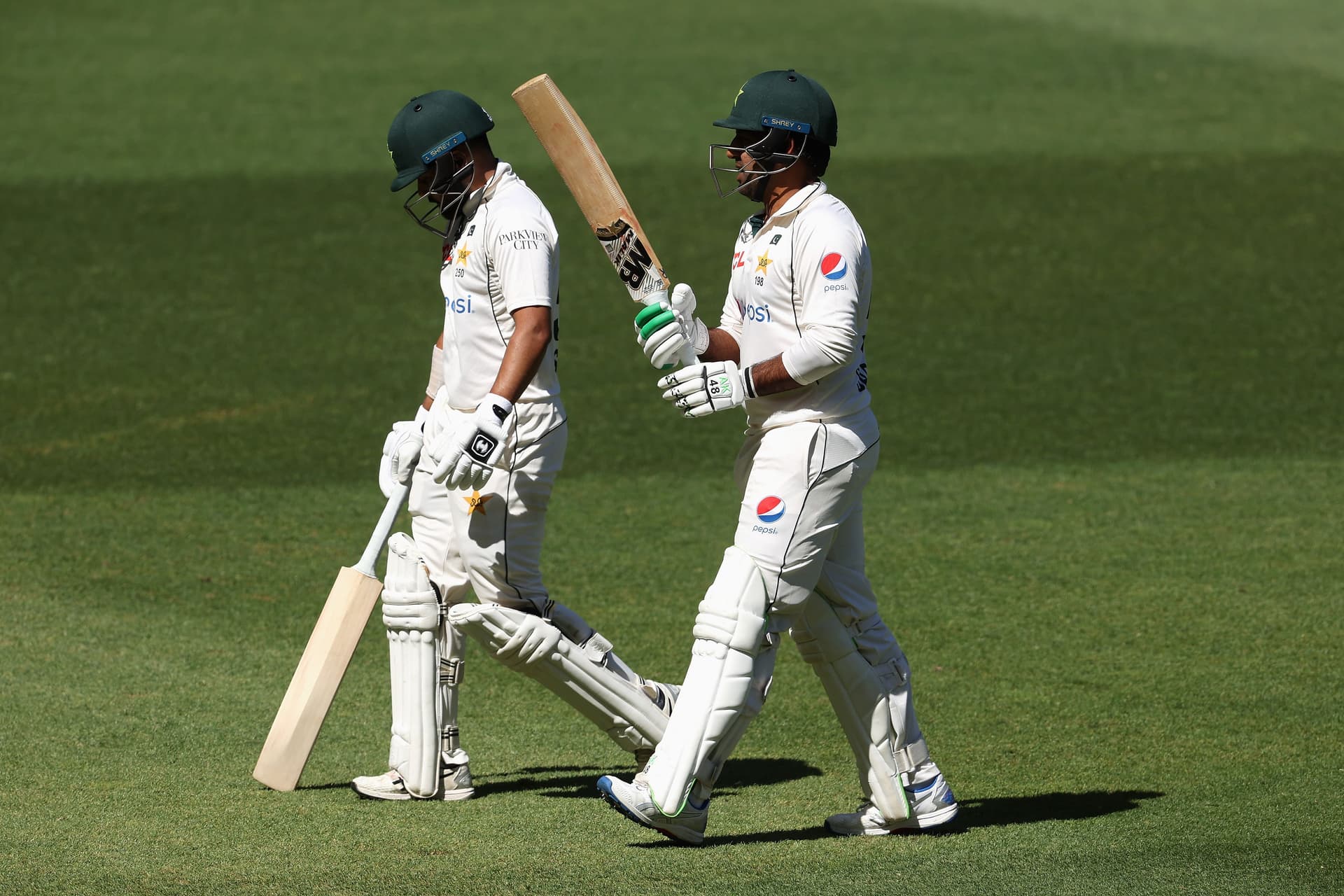
Sarfaraz Ahmed and Saud Shakeel leave the field for the tea break//Getty Images
Finally, the third and last session begins after the tea break and lasts for about two hours. If the game is interrupted by bad weather or other unforeseen circumstances, extra time may be added to this session. This is done to make up for lost time and try to complete the scheduled overs for the day.
Each of the three daily sessions in Test cricket usually includes around 30 overs. Within a session, the play can be further divided into smaller parts due to drinks breaks, which are typically called by the umpires. The timing of these drinks breaks isn’t fixed and can change based on different situations during the match.
While the idea is to have three sessions every day, changes can happen. For example, if it rains and play is stopped, there might be adjustments in the number of overs bowled in each session. The timing of the breaks can also be shifted to make up for lost time, ensuring that as much cricket as possible is played.
As per ICC rules, teams are required to bowl at a rate of about 15 overs per hour in Test matches. Ideally, six hours of play on each of the day including the breaks, and around 90 overs, have to be achieved. Over five days, around 450 overs need to be bowled, depending on various factors.
Sessions play an important role in determining the strategies of the teams. For example, early in the game, the light is bright, and the pitch is fresh, which makes it easier for bowlers to get the ball to move in tricky ways. So, to start the game, teams usually pick their best opening batters who are good at handling fast, challenging balls. As the day goes on, the light changes, and the pitch gets worn out, which can make things different for players. Toward the end of the day, if there’s only a short time left to play, teams might send out a “nightwatchman.” This is a player who isn't usually one of the best batters but goes out to bat just to protect the wicket of the better players for the next day.
Sessions in ODI cricket
The term session is relevant to ODI cricket as well. In the ODI format, there are two innings unlike the four innings in Tests. In each of the two innings, there are three sessions, usually in lengths of 15, 15, and 20 overs.
Other terms unique to Test cricket
Other than sessions, several other terms are widely used in Test cricket. Innings indicates the phase when a team bats, and each team gets two innings in a match. Follow-on occurs when the team batting second scores fewer runs than the first team did in their first innings, prompting the team to bat again without a break. Declaration is when a captain decides to end their team's innings voluntarily, usually to give their bowlers time to dismiss the opposing team. Draw is a possible result when the match ends without a winner, typically due to time running out or weather interruptions, which can happen in a five-day Test.
FAQs
How many sessions are there in a Test match?
A Test match has a total of 15 sessions. Each of the five days is divided into three sessions.
How many overs are there in each session of Test cricket?
Each session lasts about two hours and typically includes around 30 overs. There are breaks for lunch and tea during the day.
What are some important terms used in Test cricket?
Important terms in Test cricket include "innings" (the period a team bats), "follow-on" (when the second team bats again without a break), "declaration" (when a captain ends their team's innings early), and "draw" (when no winner is determined).

Umaima Saeed is a professional sports writer whose articles have been featured in several leading websites. She writes long-form content on sports, particularly cricket. She has a penchant for telling human-interest stories. Umaima has contributed articles on cricket to more than a dozen publications, both in print and online.
Comments
0 comments
No comments yet. Be the first to share your thoughts!
Related Resources to Cricket
- What Is the Lowest Innings Score in Test Cricket? Full List!
- Exclusive: Facing India No Different Than Any Other Team, Says Former Proteas Star Behardien
- Experienced Rassie van der Dussen Believes He Still Has a lot to Offer for the Proteas T20 and ODI Sides
- Proteas Captain Bavuma: ‘The Future is Bright’ as South Africa Eyes World Test Championship Final
- Long term planning and improved domestic structure paying dividend for Afghans
- "David Miller is Still Committed to Playing for South Africa," says Proteas coach Rob Walter.
- Exclusive: Zimbabwe Needs Bigger Player Pool and the Key Lies with Administrators, says Guy Whittall
- Markram's Proteas Eye Historic Series Win and World Test Championship Final Spot
- The Shortest Test Matches in Cricket History!
- What coin is used for the toss in Cricket?
- ICC Champions Trophy: Who Won the Most Titles?
- Exclusive: “We will eventually win the World Cup,” says former Proteas all-rounder Robin Peterson
- The Greatest Cricket Upsets Across Test, ODI, and T20
- Nkwe Hails Proteas Women’s World Cup Legacy: Inspiring the Next Generation of Cricketers
- Ireland’s Kevin O’Brien Reflects on India’s Passion for Cricket and His Memorable Journey in Legends League
- Reverse Swing in Cricket: The Game-Changing Bowling Technique Explained
- Vinay Kumar Reflects on His Career: “More Opportunities Could Have Made a Big Difference, But I'm Grateful”
- Exclusive: What's Wrong with Pakistan cricket? Shoaib Mohammad spells out
- Exclusive: Russell Domingo on how the Proteas can bounce back in the WTC from Dhaka
- Fastest Cricketers to Reach 1000 Runs in T20 History (Updated)