
Football
Football's Get-Out Clause: Explaining the Release Clause in Football
Release clauses are often confused with the term “buy-out” clauses.

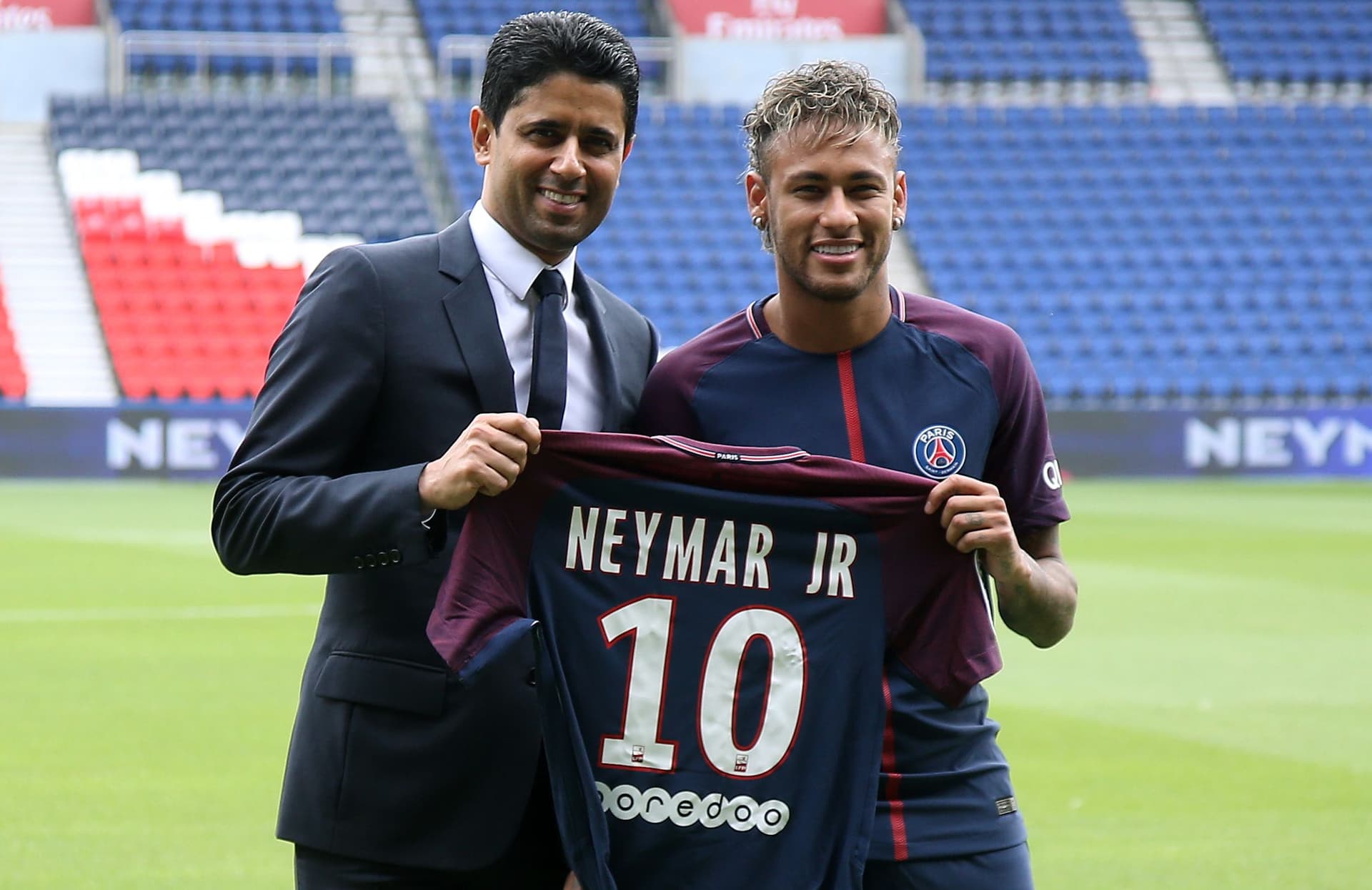
Neymar Jr with President of PSG Nasser Al-Khelaifi/Getty Images
Continuing on our series of explaining football terms that fans may not be completely familiar with. The transfer market has changed a lot in recent years due to the exceptional rise in transfer fees, agents fees, wages and many other factors.
Even the loan fees have seen a sharp rise in recent years. The English Premier League has been the heart and centre of the intense spending every transfer window. English Premier League clubs combined spent a staggering £2.36 billion during the 2023 summer transfer window. The complete landscape of the transfers has changed and is also centred by certain “super agents”.
One term that all fans have heard while checking the transfer rumours during these windows is the “release clause”. In this article, we take a deeper dive into the meaning of the term “release clause” and the terms surrounding it.
What is a release clause in football?
The entire football world is run on contracts, be it players, managers or even club support staff. A contract is basically an agreement between the player/manager with the club that employs them. Contracts normally dedicate the time that the club owns the player.
For the player to leave the club during this contract period, the other club have to make a transfer offer or pay the player’s “release clause”.
The release clause is a pre-agreed clause in the player’s contract with the club that sets out a transfer fee for the player. The club are bound to accept the offer if any other club offers the exact value.
As soon as the release clause is met, it is now up to the player to enter negotiations with the buying club and agree to join the club or not. If the release clause has been met, the player’s original club can not stand in their way to talk or negotiate with the buying club.
The biggest and best example of a release clause transfer is of Neymar joining PSG from FC Barcelona. In the summer of 2017, PSG paid Neymar’s reported €222 million release clause, making him the most expensive player in football history and effectively changing the transfer windows forever.
Despite contrary belief, managers can also have release clauses in their contract, allowing them to leave the club if the agreed amount is met by any other clubs. One of the best and biggest examples of this is Julian Nagelsmann, who switched from RB Leipzig to Bayern Munich within the Bundesliga. Bayern paid an incredible €20 million release clause to get the young German coach to the Allianz Arena.
What is a buy-out clause?
Many fans may confuse the release clause and buyout clause as the same thing. But this is not the case at all.
The buy-out clause means the player themselves have to buy out their own contract. This is done in a way that the buying club transfers the agreed fee to the player, who in turn transfers the agreed sum to their current club, effectively buying out their own contract.
It may not be mandatory but in the Spanish top-flight LaLiga, basically all players have a pre-agreed release clause or buy-out clause in their contract.
One of the best and most recent examples of the buy-out clause can be the reported Martin Zubimendi transfer to Liverpool, which broke down in the end. Reports suggested that Real Sociedad instructed Martin Zubimendi that he must pay his own release clause if he wishes to leave La Real and join the Premier League club.
Reports also suggest that Manchester City star Erling Haaland also has a buyout clause upwards of €200m in his current contract with the Premier League club. Top LaLiga stars such as Pedri, Vinicus Jr and Ronald Araujo also have big buyout clauses in their contracts.
What is a buy-back clause?
Buy-back clause can be described as a contract detail used by clubs who expect the player they are moving on to improve in value, and thus want to give themselves the option of re-signing that same player in the future for a pre-set transfer fee.
Comments
0 comments
No comments yet. Be the first to share your thoughts!
Related Resources to Football
- La Liga Betting Sites
- Best Europa League Betting Sites: Top Bookmakers Tested
- Is Rugby Safer Than American football?
- Who are the most Supported Football Clubs in the World?
- What is the longest football match in history?
- Which Player Recorded the Fastest Shot in Football?
- When Do Football Players Retire?
- Which Player Has Won the Most Champions League Titles in History?
- Top Seven Longest Serving Premier League Managers in History
- Top 10 Best Ballon d’Or Winners
- Top 10 most expensive football trophies in the world
- What Does “Hala Madrid” Mean?
- How many Guinness World Records does Lionel Messi hold?
- Top five best football coaches of all time
- Positions on a Football Team
- The Longest Unbeaten Runs in Football
- How Many Guinness Book of Records Does Ronaldo Have?
- Best Male Footballers Bet
- Who has the most trophies in football?
- Top Five Most Watched Football Leagues
You might also be interested in
- What is an Assist In Football? The Magic Behind Every Goal
- What is tiki-taka?
- What is the Free-Kick Rule in Football?
- Understanding Hat-Tricks in Football: A Complete Guide
- Half-Time/Full-Time Betting Explained
- Curious About Semi-Pro Footballer Salaries in the UK? Find Out here!
- How to Analyze a Teams Form for Sports Betting
- Totals Betting Explained
- What Are Expected Goals (xG) in Football? A Comprehensive Guide
- What Does Corners Match Bet Mean?

With over a decade of experience in sports writing, Hardik Malhotra has built a distinguished career in the internet industry. His expertise spans across various domains including Art Direction, Web Content Writing, and Content Management, all underscored by a high degree of initiative. Hardik’s passion for sports is reflected in his professional journey and personal interests.