
Football Interviews
Former Premier League Official Graham Scott Predicts Refereeing Revolution at 2026 World Cup
Graham Scott, a respected English football referee, discusses the evolution of refereeing, fans' misunderstandings, VAR technology, and upcoming rule changes. He emphasizes the need for fair play, transparency, and understanding from fans towards referees and VAR technology.
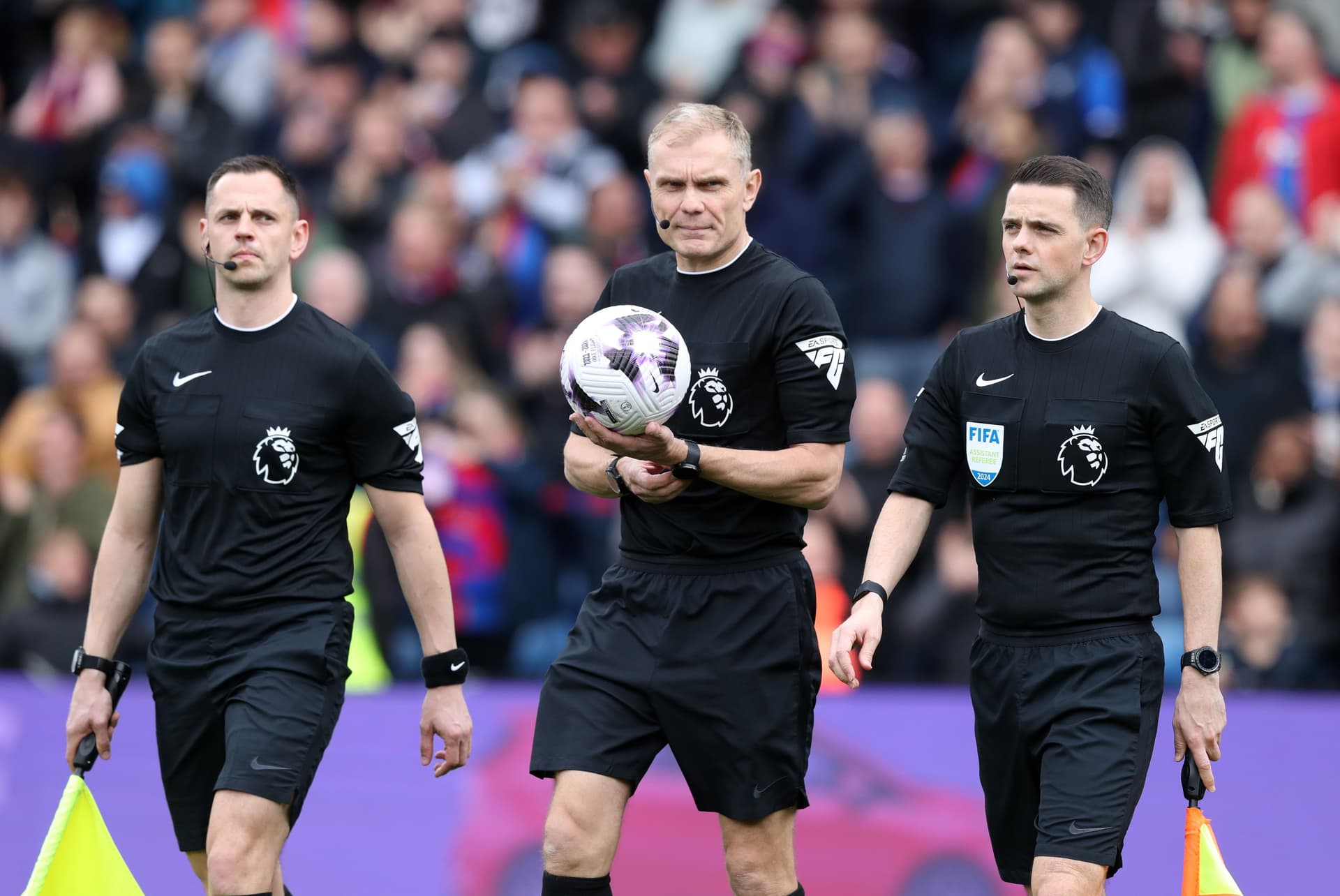
Credit: Getty Images
Graham Scott has spent more than two decades at the heart of English football officiating, rising from the lower leagues in 1997 to become a familiar presence in the Premier League.
Now reflecting on his career in an exclusive interview with SportsBoom, Scott offers a candid insight into how refereeing has evolved, how supporters perceive officials, and how upcoming World Cup-related changes could reshape the future of the game.
World Cup innovation: VAR, AI and the push for faster football
With the next World Cup set to bring further adjustments to the Laws of the Game, Scott believes football is entering a decisive era, one where technology and refereeing will become even more tightly connected.
Among the key talking points is VAR usage inside stadiums, something Scott believes could improve transparency at the highest level of the game.
“I would allow the supporters in the stadium to see the pictures. I would, as the referee, be shown the replays on the big screen, so I could make the decision in the stadium, not the VAR would simply arrange the replays for me, and I would watch them, I would talk over the pictures, and then the supporters could hear what I was thinking,” Graham Scott told SportsBoom.com.
Looking ahead to the 2026 World Cup era, Scott expects automation to play a growing role, particularly in offside decisions.
“Yes, I think offside will become the factual offside decisions will be made by the computers, by AI, by automated technology, but we will still need assistant referees to determine who played the ball last and to help with subjective offside decisions. So whether a player is, for example, interfered with an opponent or the goalkeeper's line of vision, that will still require people,” the former referee said.
However, while technology will continue to evolve, Scott is clear that the rhythm of the game must remain intact, and he is cautious about radical changes to timing itself.
“I think any moves to speed up the game are welcome. And of course, we shall have those, and I think we need to have the ball in play more, and I think that the game needs to flow better, to be continuous. I don't like the idea of stopping the clock. I would much rather solve the problem of slow play by speeding up the match than stopping the clock,” Graham added.
VAR misunderstandings and the referee’s perspective
Despite ongoing debate around VAR protocols, Scott insists much of the criticism stems from a misunderstanding of how the system actually works.
“No, and they have no excuse because the protocol is published. It's available on the website. It's not a secret. and they should know,” he said about this topic.
He also rejects the idea that VAR removes authority from on-field officials, stressing that referees still make the core decisions in real time.
“As referees, we make the decision in the moment. And the VAR does not affect that process. It certainly did not for me. So I made the best decision I could, standing where I was, with the view that I had, based on the information available."
A message to fans ahead of football’s next era
With the World Cup cycle ushering in further technological change and renewed debate around officiating, Scott’s message to supporters is rooted in perspective and respect.
“That we are human beings doing our very best, that we only want to see fair play, and that we are not biased against their team. We're not biased against any team. We just want to see a fair game, and a fair outcome, and that no one notices us when we are when we go home, and we want people to say that they didn't notice we were there,” Scott concluded.
Comments
0 comments
No comments yet. Be the first to share your thoughts!
Related Resources to Football Interviews
- Former Owls Boss Chris Turner Speaks Out on Sheffield Wednesday Owner Crisis and Sends Plea to New Regime
- Former Man United Keeper Delivers Verdict on Michael Carrick’s Future as Permanent Manager
- Exclusive: Andre Ayew Committed to NAC Breda’s Survival Battle in Eredivisie
- Exclusive: Warren Barton on Newcastle United’s Golden Era and Modern Revival
- “Eddie Howe Is a Blend of Kevin Keegan and Sir Bobby Robson” — Warren Barton on Newcastle’s Present and Future
- Exclusive: Gradus Kraus Believes He Can Lead Boxing’s Rise to Rival Football and Darts in the Netherlands
- Exclusive: Semi Ajayi Dismisses Injury Claims Behind West Brom Exit as He Backs Hull City Promotion Project
- Exclusive: Calvin Bassey Opens Up on Criticism, Growth and Becoming a Fulham Leader
- Exclusive: Frank Onyeka Breaks Silence on Lack of Game Time at Brentford
- Exclusive: Failed Southampton Striker Paul Onuachu Reveals Why the Style Never Suited Him
- Exclusive: City Legend Paul Dickov Doubts Anyone Can Ever Replace Pep Guardiola
- Exclusive: Erling Haaland Has the Ronaldo and Messi Trait and Keeps Improving With Age, says Paul Dickov
- Exclusive: Tottenham Legend Paul Miller Drums Support for Under-Fire Manager Thomas Frank
- Exclusive: Doneil Henry Eyes Italy Dream as Canada Target 2026 World Cup Breakthrough
- Exclusive: Former Coach Stephen Hart Reflects on Canada’s Journey — and Why 2026 Could Be Different
- Exclusive: Burnley Can Mix It with the Best in the Premier League, says Zian Flemming
- Exclusive: Clint Dempsey Backs Revitalised Team USA as 2026 World Cup “Dark Horses”
- Exclusive: Former Northern Ireland International Grant McCann Backs Country to End 40-Year World Cup Wait
- Exclusive: Casemiro Still a Top Player says Manchester United Legend Bryan Robson
- Exclusive: Kenny Dalglish Urges Patience with Wirtz and Isak as Liverpool Find Their Feet
Beyond writing, Xhulio has worked on numerous football development projects as a project manager for international academies, tournaments, and grassroots initiatives, collaborating with organizations such as Valencia CF, Perugia Tournament, and Football for Peace. He has also served as a sports lawyer with EFA Sports Agency and FC Basania, further strengthening his expertise in the legal and administrative dimensions of football.